
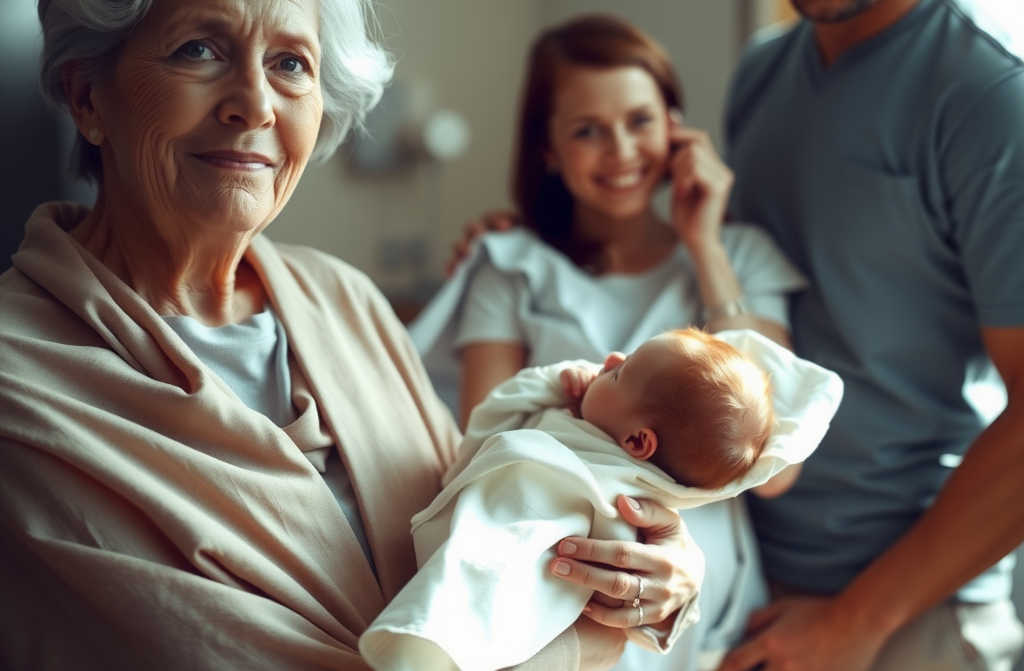
Have you seen her, ladies, the woman in our ward? She looks far older now
Yes, she’s turned completely silver. Perhaps she has grandchildren, but still the babys cravingat her age, its odd
My mother looks younger than her. I wonder how old her husband might be.
She keeps to herself, gloomy, never talks to anyone.
Shes shy, thats why she stays silent. We all try to be her daughters. I dont even know what to call her. They say her name is Agnes.
Perhaps we should use her full name, with her father’s name The discussion in the maternity ward swelled when one of the expectant mothers stepped out for a moment.
—
Agness fate had been cruel. When Emily was four, a fever swept through her whole family. Her mother, father, oneyearold brother and her grandfather all succumbed. From then on, Emily was raised by her stern, domineering grandmother, Eleanor, who knew nothing of tenderness.
In the fortyfirst year of their lives, Emily and Jack turned thirteen. They lived in separate hamlets, then moved to the market town of Oakham to work in the steelworks, where labor was scarce.
They lived in the workers hostel by the plant and met there. From those youthful days they toiled side by side with the grownups, never easing their grip.
At fifteen, Jack was called up to the front. Emily, a vivacious girl with flamingred hair, was ready to go with him, but the army turned her away. We need you more here, they said, workers like you are harder to replace.
When they were eighteen, Emily and Jack married quietly; there was no celebration. The postwar years were bleak, hardly a time for festivity.
To Eleanors great displeasure, Emily moved in with her husband. Their farms lay thirty miles apart.
A year later a son was born, named William. The young parents were thrilled; their home blossomed with peace. Their early years were stormy, and they had earned this sliver of happiness through hard suffering.
But the joy was fleeting.
When William turned six, Emily and her husband still lived as one, the envy of the village. George, the villages furnacemaster, was famed far and wide for his braziers.
George was summoned to install a new furnace in a neighboring village across the river. He took little William with him, for Emily was at work. The weather was bitter; they marched across a frozen river.
George lugged a heavy toolboxhe trusted only his own tools, never anothers.
William frolicked, paying little heed to his fathers admonitions to stay close. With only twenty metres left to the bank, the boy slipped into a snowcovered pool. George lunged to rescue him, but
Agnes had turned grey at twentyfive, after losing both husband and son. She could not bear a house that echoed with their memories, so Emily fled back to her native hamlet to stay with Eleanor.
Emily shut herself off, life losing its colour. She thought of rebuilding a family, but the notion never stirred.
Now Agnes was fortythree. At her age, without a partner, Emily made a deliberate choice.
She understood the hardships that lay ahead, yet the thought of solitude frightened her more than any future trial.
The village where Emily lived was remote; reaching it was no simple matter. It was a freezing evening, and fearing that aid might arrive too late, the woman arrived at the hospital early, anxious for the childs health, her age weighing on her mind.
From dawn, Emily drifted like a phantom through the sterile corridors: eighteen years ago she had lost the love of her life and her son. Time did not heal her; the ache remained fresh.
Emily gave birth to a healthy boy she named Harry. She always recalled how William used to dream of a brother.
Buy me a little brother, he had pleaded. Dad made me so many toys! Ill play with him.
What will you call him? their father had asked.
Harry! William had shouted.
Then hell be Harry! George beamed, exchanging a glance with Emily.
At that moment hope glimmered for Emily; George knew it well. They agreed not to speak of William for a while. When husband and son died, Emilys grief eclipsed everything.
Now Harry arrived, just as William had imagined.
Grandma Eleanor greeted Emily and the newborn with a scowl as she stepped out of the hospital.
Whats this, youre crying again, my dear? Emily cooed, soothing the infant.
Ugh, how shameful, Eleanor muttered, her voice creaking. The whole village will surely gossip about your disgrace.
Its been a week I havent shown my face on the street, Emily whispered. Theyll start asking questions. What will I tell them? That my grownup granddaughter has lost her mind?
In the village, chatter spread like wildfire. Nothing stirred the locals more than a thirtythreeyearold single woman and her newborn son.
Eleanor berated Emily mercilessly. Yet within a year, the spry old woman, despite her years, fell ill and passed away.
Emily mourned, even though the woman who had raised her was gone
Harry grew into a striking young mantall, darkeyed, with a mop of hair that wasnt his mothers. He was loved dearly.
At seventy, Emily became a grandmother. When news of his daughters birth reached Harry, he and his mother drove to the hospital. His wife, Susan, lay on the first floor.
Susan, Susan! the jubilant father cried. Show us the baby!
Susan appeared at the window, cradling the child. Emily smiled through tears.
Look, Mum, shes a little redhead! She looks just like you! Harry laughed. For Agnes, seeing her grandsons happiness was a balm; the world no longer seemed so frightening.
If you enjoyed the tale, leave a comment and a like. Your support keeps the stories flowing.