
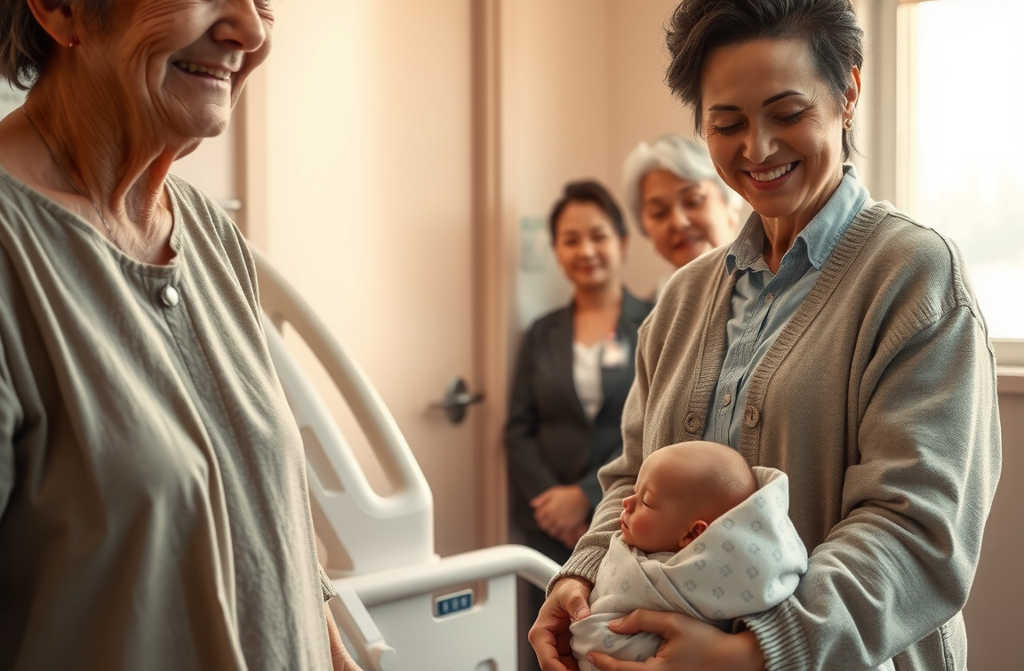
Did you see her, girls? The old woman in our ward?
Grey as a winter sky, whispered one, eyes flicking to the corner where the frail figure sat. She must have grandchildren, yet here she is, as if the years have stolen everything else.
My mother seems younger than her, another murmured. I wonder how old her husband was when he passed.
She keeps to herself, sullen, speaks to no one, a third added. Were all trying to address her as Mrs. Greene, but I cant even think of the right name. They call her Agnes, I suppose.
Perhaps it would be proper to use her full name and patronymic, someone suggested, as the chatter in the maternity ward swelled when a expectant mother stepped out for a moment.
—
Agness life had been a hard road. When she was just four, a fever swept through her family; mother, father, infant brother and even her grandfather fell ill and none survived. From that day onward, she was raised by her stern grandmother, Mary, a woman whose love was measured in discipline, not affection.
It was the year 1941 when fifteenyearold Ethel and Victor, both thirteen, left the tiny hamlets of Little Winton and Hartfield and trekked to the bustling town of Birmingham in search of work. The war had thinned the factory ranks, and the steel works hungered for hands. They settled in the rows of terraced houses that grew up beside the plant, and it was there, amid the clang of machines, that they first met.
From that youthful age they laboured side by side, as hard as any grown man.
At fifteen Victor was conscripted to the front. Ethel, fieryhaired and eager, begged to go with him, but the army turned her away. We need you here, in the rear, they said. Your work is just as valuable.
When they turned eighteen, they married quietly; no wedding bells rang, for the postwar years left little room for celebration.
Ethel, to her grandmothers displeasure, moved in with Victor. Their farms lay thirty miles apart, a distance that felt like a chasm. A year later a son was born, and they named him William. For a fleeting moment the house was filled with laughter, and the couple felt the peace they had longed for. Yet the shadows of their younger years had already etched deep lines in their lives.
When William turned six, the couple were still the talk of the village. Victor earned a reputation as a master stovemaker; his brick ovens were the pride of the county.
One bleak January, Victor was sent to install a stove in a neighboring village across the River Severn. He took young William with him, for Ethel was at work. The air was bitter, the river frozen solid, and Victor hobbled across with a heavy toolboxhe trusted only his own tools. William, full of mischief, ignored his fathers pleas to stay close. As they neared the bank, a slip sent the boy into a shallow, snowcovered hollow. Victor lunged, but the icy water claimed the boy before his father could reach him.
Agnes, already grey at twentyfive when she lost her husband and son, could not bear the house that echoed with their memory. She left the cottage and returned to the familiar fields of Little Winton, under the watchful eye of Grandma Mary.
Grief wrapped Ethel in a cold shroud; life seemed void of purpose, and thoughts of a new family never crossed her mind.
Now, at fortythree, Agnes had watched Ethels sorrow for years. Though the world had moved on, the old woman still carried the weight of loss. One bitter winter, with the village road slick and the hospital a mile away, Ethel arrived early, heart hammering for the health of the child she was about to bring into the world. She recalled, as if it were yesterday, the night eighteen years prior when she lost both husband and son; time had not soothed the ache, and the pain still pulsed beneath her ribs.
When the babys cry filled the delivery ward, Ethel named him David. The memory of Williams yearning surfaced:
Buy me a little brother, William had once begged, eyes wide. What will you call him? his father had asked. David! he had shouted.
Victor had heard the wish, and they had kept Williams name alive in whispers. Now David arrived, just as William had dreamed.
Grandma Mary, ever blunt, took one look at the newborn and the tired mother.
Whats this I hear, youre crying again, my dear? she croaked, trying to soothe the infant.
Aye, youre a nuisance, thats what you are, Mary muttered, her voice like dry leaves. The whole village will gossip about your scandal, a spinster at fortythree with a babe in her arms.
Ethel kept her head down, refusing to show her face in public for a week, fearing the endless questions. What shall I tell them? That my mind has gone mad? she thought.
The village tongues wagged for months. Nothing unsettled a rural community more than an older, unmarried woman bearing a child. Marys sharp words cut deep, yet a year later the ironwilled grandmother, still spry for her years, passed away, leaving Ethel to grieve the loss of the only person who had ever truly raised her.
David grew into a striking young mantall, darkhaired, with a square jaw that bore no resemblance to his mothers gentle features. He loved her fiercely.
When Ethel reached her seventieth year, she became a grandmother herself. Upon hearing that his sister, now a small infant, lay in the hospital, David rode with his mother to the ward where his wife, Susan, rested on the first floor.
Susan, Susan, David called, his voice bubbling with joy. Show us our daughter!
Susan appeared at the window, cradling the tiny bundle. Ethels eyes welled, a smile breaking across her weathered face.
Look, Mum, shes a redhaired little thingjust like you! David exclaimed, beaming.
For Agnes, watching her grandsons delight was a quiet triumph; the cycles of sorrow and hope had finally intertwined.
The story lives on, whispered in the lanes of Little Winton, a reminder that even amid loss, new life can flicker into being, and love endures beyond the darkest of winters.