
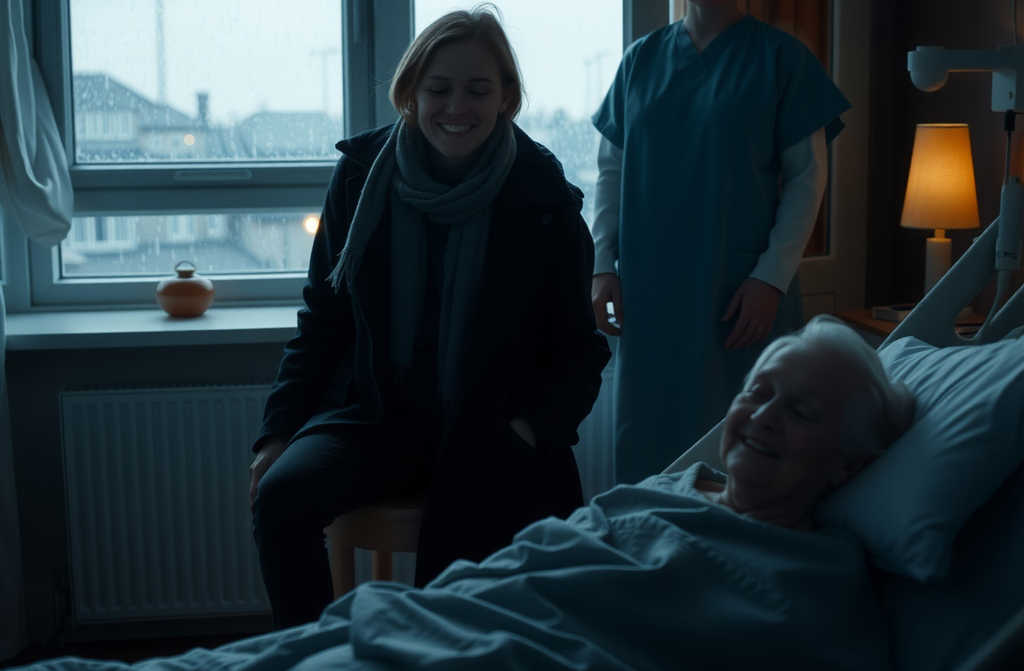
mum, Ill be quickno more than twenty minutes, I said, standing in the doorway of the ward, trying to smile while my lips trembled.
Just dont linger, Moll lay on her side, clutching the blanket. The doctor said the drip will start this evening.
I nodded, slung my coat over my shoulder and headed out. The street was damp and blustery. October in York never spared its passersbyrain, wind, puddles that seemed to mirror the whole mood of an English autumn: a low sky, silent people, everything waiting for the close of the day.
I walked toward the bus stop and felt the minutes slipping away. Not just the busI was racing against life itself, against everything that kept moving past me.
Three weeks earlier the doctors had said my mother was in the final stage. I hadnt wept then. I simply sat on a bench outside the mortuarysomehow my feet had taken me thereand stayed until dark fell.
So, youre planning to go? asked the neighbour in the next bed, a thinnecked old man with eyes that always seemed to be waiting for something.
Im waiting for my son, Moll replied with a faint smile. He promised hed be here this evening.
He comes often?
Every day. But I keep wondering maybe Im holding him back? He has his own life.
The old man cleared his throat and whispered, It isnt you who holds him, its he who wont let go. Until he does, you wont be able to leave.
Moll turned toward the window. Outside, rain streamed down the glass. It was strangeshe had once loved the rain. In her youth it felt romantic: sitting in the kitchen with a hot tea, listening to the drops patter on the sill. Now it only blurred her view.
I slipped into the old park where, as a child, Moll and I had sledded down the hill. By the third birch from the entrance she had once said to me, Listen, lad, it doesnt matter what you do. What matters is that someone smiles because of you. Even just one person.
I didnt understand then. Now I understood all too well.
My phone buzzed: Mum: No rush, Im alright. I gave a reflex smilelately shed been sending those no rush texts, probably to keep me from worrying.
The ward fell silent. The old man had drifted off, the nurse stepped out. Moll lay staring at the ceiling when a faint melody floated in from somewhere down the corridora old folk tune, The Autumn Rain. She smiled. Good heavens, even here she thought, and closed her eyes.
A soft presence settled beside her, as quiet as a sighing wind.
Dont be afraid, a voice whispered, its all over now. She didnt open her eyes, simply inhaled and murmured, Just dont let him cry.
I sprinted back forty minutes later. The doctors were already out of the room, the nurse stood in the doorway, her eyes pink from tears. I understood without a word.
May I? I asked quietly.
Yes, she nodded, but not for long.
I sat beside Moll. She lay peacefully, almost as if she were smiling. On the bedside table the phone glowed with an unsent message: Iain, dont wait for a miracle. Be the miracle yourself. I stared at the screen until it hurt.
Then I noticed a tiny heart formed by the rain streaks on the window, as if someone had drawn it with a fingertip from inside. I smiledfor the first time in many days.
A year passed.
I stood at the entrance of the childrens oncology unit, a thermos of tea in one hand and a basket of apples and pears in the other.
Are you a volunteer? the security guard asked.
Yes, I replied, smiling, I just want someone to smile.
A balding boy darted up the corridor and shouted, Uncle, lookIm getting better! I felt a warm surge. Miracles do happen, I thought, even if they sometimes come through us.