
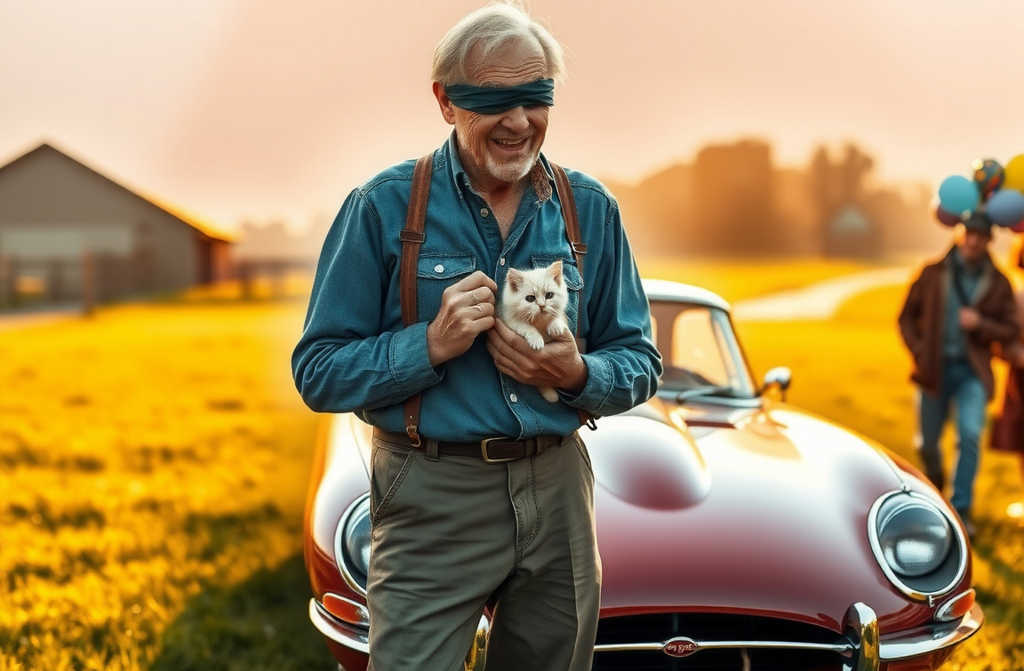
He had reached his seventieth year, a widower for three decades, with three children grown. His wife, Margaret, had passed away when the house was still echoing with the laughter of newborns, and he never took another hand in marriage. No luck, no chance, no desirethere were enough reasons to list, but what use would they be now?
The two boys, Edward and Henry, were the sort of lads who turned every schoolyard into a battlefield. He shuttled them from one academy to another until, at last, they fell under the tutelage of a keen physics master at a grammar school in Lincolnshire. The teacher spotted a raw talent for numbers and mechanics, and in an instant the quarrels and scrapes vanished.
His daughter, Eleanor, lived a quieter storm. She struggled to fit in with her peers, and the school counsellor had already suggested a visit to a psychiatrist. Then a new literature teacher arrived, opening a fledgling writers circle. From that day she wrote from dawn till dusk, her short stories first gracing the school newsletter and soon appearing in every local literary society.
In time, the boys earned scholarships to the University of Cambridges prestigious Faculty of Natural Sciences, while Eleanor won a place at Oxford to study English. Their father, Arthur Whitaker, was left alone on the sprawling family farm that bordered the River Ouse. The silence that settled over the fields was as deep as a wolfs howl.
He turned his hands to fishing, tending the vegetable plot, and rearing a small herd of pigs. The land provided a modest income, enough to see that an engineer at the nearby steelworks earned far less than a farmers share. With the pennies he saved, he could still slip a modest motorbike or a sturdy coat into his childrens pockets, but the years slipped through his fingers faster than the rivers current.
Ten more years drifted by, and his seventieth birthday approached. He imagined a solitary celebrationperhaps a walk among the barley, a quiet evening with a glass of brandy, and a whispered conversation with Margarets portrait on the mantle, recounting how the children had grown.
On the morning of the day, he rose before the sun to tend the piglets, the special winter feed they now needed. As he stepped out onto the dewslick meadow, still glittering with the last stars, something odd caught his eye in the centre of the clearing. A long, canvaswrapped shape lay there, half hidden in the grass.
What on earth is that? he muttered, whensuddenlyspotlights snapped on, bathing the meadow in stark white light. Figures emerged from the houses shadowed doorway: his sons with their wives and children, a throng of grandchildren, and Eleanor, escorted by a tall gentleman in thick spectacles.
Each held a balloon, some hissed air from noisy cans, and all shouted in unison, waving their arms:
Happy Birthday, Dad!
The odd wrapped object was forgotten as a chorus of embraces surrounded him. Eleanor stepped forward, a soft cloth in hand.
Hold still, Father, she said. May I bind your eyes?
Very well, he replied, a smile tugging at his lips.
She tied a snug bandage over his eyes and, with a playful spin, led him away. What are you up to now? he asked, halflaughing.
A little present, said Edward, grinning.
Hope it isnt too pricey, Arthur replied, feigning worry. Ive got everything I need.
Dont mind yourself, said Henry, chuckling. Just a modest token of gratitude.
When the fabric was pulled away, a thunderous drumbeat rolled from speakers, and the crowd surged forward. Together they ripped the tarp from the object beneath. In the blaze of the spotlights a gleaming Jaguar EType, its polished chrome catching the morning light, sat like a relic from a bygone era.
Arthurs breath caught; he staggered, his heart thundering as though it might burst. A hand steadied him, and he was guided to a wooden chair.
Good Lord, he repeated, his voice shaking. Good Lord, good Lord
Eleanor splashed a spray of water on his cheek. Youve always dreamed of this car, Father, she said.
It must be astronomically expensive, he whispered.
Its not more than a few pounds, Edward replied. Just a little something.
Come on, urged Eleanor. Sit inside. Well take a few photographs.
He opened the door, but a cardboard box sat in the passenger seat. Whats this? he asked.
Open it, Eleanor urged.
Inside, two bright eyes stared up at him. He lifted a tiny, fluffy creaturea kitten, its fur the colour of cream, a reminder of the little Siamese they had once owned with Margaret, whom they had called Bramble. The children laughed.
No, I wont sit in the car, he said, his voice thick with emotion. He carried the kitten upstairs to his small bedroom, where an old photograph of Margaret rested on the bedside table. Tears streamed down his cheeks.
Do you see, Margaret? Do you see? he whispered to the picture, his fingers trembling. Ive managed. Nothings been forgotten do you see?
The children wouldnt let him linger alone. A long table was laid out in the kitchen, and toast after toast rose in celebration. Eleanor leaned close, whispering that she was four months pregnant and that she and her fiancéThomas, a young doctor from Bathhad come to stay. She would remain on the farm, her writing taking her wherever she chose, while Thomas would travel back to his parents in New England before their wedding in the village church.
Is that alright with you, Father? she asked.
It feels like a dream, Arthur answered, planting a kiss on her forehead.
The day unfolded in merry chatter, food, a few glasses of ale, and stories of days gone by. As dusk settled, he walked to Margarets graveside, sat on the cold stone, and spoke to her as if she were still there, his voice carrying the farms night air.
Life, he thought, was taking on a new hue. That Jaguar, that kittenthese were signs that the world still held wonder. He imagined buying a proper suit, taking the car for a spin to the nearby market town of York, feeling the wind rush past as the engine purred.
On the bed, the kittennow named Tomkinpurred contentedly. Tomkin, he said, and repeated it like a lullaby. The little cat stretched, its tiny paws twitching.
The next morning, the chores called: feeding the pigs, checking the garden rows, casting a line into the river. Downstairs, Eleanor and Thomas slept in the guest room, the soft breaths of their unborn child a gentle rhythm in the house.
When the boys and their families drove away later that day, silence settled once more over the fields. Tomkin followed Arthur to the pig trough, slipped into a feed bucket, and tangled in the netting of his little rowing boat, then tried to nibble at a fish bait. Arthur laughed, ruffling the cats ears.
Feels like Ive been handed a second youth, he said, patting Tomkins back. The kitten mewed, its tiny claws sinking into his hand.
Ah, you little rascal, Arthur chuckled, the farms quiet now alive with the soft sounds of life.
And so the story endsnot as a grand saga, but as a quiet reminder to those who still have the chance to visit their roots:
Dont wait for tomorrow. Set off today.