
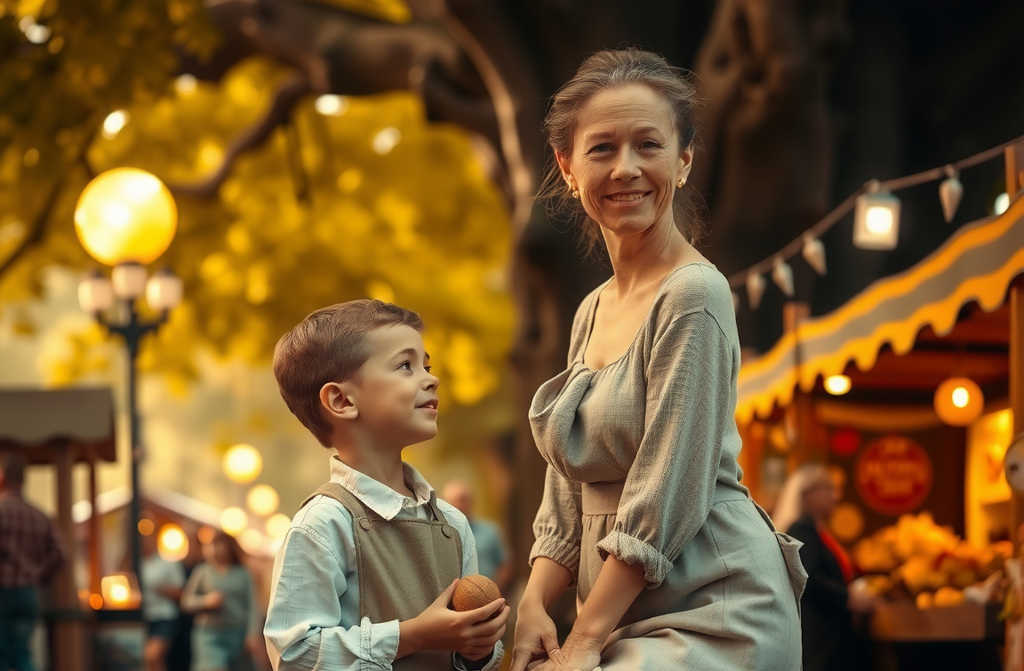
When Emily Carter finally walked back into Littleford, nobody recognised her at first.
Itd been thirty years. Thirty years since, as an eighteenyearold, shed hopped on a coach to London and vanished. At first she sent letters, then fewer and fewer, until they stopped altogether. Folks whispered that shed gotten married and moved abroad; others muttered that something had gone wrong for her.
Now she stood by the old fence where their house used to be, the spot where a massive walnut tree had once grown. The fence was leaning, the garden overrun with docks, but the walnut still rustled in the wind, its branches thicker now, as if itd been waiting just for her.
Emily? called Nora, the neighbour, stepping out of the gate, eyes wide as if she couldnt believe what she was seeing. Is that really you?
Its me, Aunt Nora, Emily replied, a smile trembling on her lips. Im home.
No way! Nora gasped, crossing herself. Youre alive! We thought
She didnt finish the sentence. She moved forward, wrapped Emily in a hug, and both of them started to crynot a wail, just the quiet, exhausted kind of tears people let slip when theyve held everything inside for too long.
Emilys old family cottage sat on the edge of the village. Her father used to bake bread for the whole hamlet, famous for a loaf that smelled like a celebration. People would come for a crust not just to eat, but for the warmth it carried.
Your dads miracle bread was something else, Nora sighed later, as they rested on a bench at dusk. Remember how hed knead the dough by hand, then call the kids over to sniff it? Remember that smell, hed say, its home.
I do, Emily whispered. That scent is the strongest memory I have.
She fell silent. In London she really did get marriedto an engineer, had a daughter named Poppy, and then divorced. She worked in a café before opening a tiny bakery, trying to copy her dads recipe, but the magic never quite landed.
Your dad never followed a book, Nora nudged. He baked with his heart.
Exactly, Emily nodded. Thats whats missing.
The next morning Emily went to the village post office, now also a community hub and council office, hoping to find out who owned the old cottage. It turned out no one did; the place was officially listed as abandoned. A week later she sorted the paperwork and decided to stay.
At first everyone staredcity folk in heels, eyes shining with curiosity. Then they got used to it. Emily bought a sturdy mixer, hauled flour and yeast up from London, cleaned the ancient oven, and one crisp morning the whole village was perfumed with that familiar, homey aroma.
Old men shuffled out onto the lane, pausing as if a memory had been tugged loose. Children twirled by the gate, peeking through windows. By evening, when Emily laid out the first fresh loaves, a line curled up to the gate just like old times.
Good heavens, Emily, they cried. Just like your dads! Spot on!
She only smiled, thinking, Not exactly the same, but close enough.
One evening a wiry, silverhaired gentleman in a worn jacket lingered by the shop. He hesitated before stepping inside.
Emily he finally managed.
She turned, and her heart gave a little jump.
Leo? she breathed.
He nodded. It was Leo, the boy from next door theyd both known at schoolsame cheeky grin, the same dreams. Hed stayed, married, lost his wife, raised a son. Now he stood there, fidgeting like a teenager.
Your bread, he began, reminds me of the old days. Maybe even better.
Thanks, Emily said, gesturing to a chair. Come, have a cup of tea.
And that was the start.
First came chat over mugs, then help with firewood, a repaired oven, and gradually Leo became a regular at dusk. Sometimes they sat in comfortable silence; other times they talked till the stars fadedabout lives lived, losses endured, the stubborn will to keep moving.
One night he said, You know, Ive thought of you all these years.
Me? After thirty years?
How could I forget? he shrugged. Whenever the bread smells, I picture you.
Winter brought Poppy down from the citybright, noisy, phone in one hand, laptop in the other.
Mum, she said, eyeing the oven, are you serious about staying here? No WiFi, no deliveries, nothing?
Poppy, Ive got everything I needpeople, a home, the bread.
But why? she snapped, tapping her laptop lid. Its a dead end.
Poppy, Emily murmured, do you ever smell childhood?
What? her daughter blinked.
That feeling when you close your eyes and instantly feel warm, safe, like someones hugging you. Do you have that?
Poppy fell silent. Later, when Emily pulled a fresh loaf from the oven, Poppy walked over and hugged her.
Mum I think I get it now.
From then on Poppy visited every summer, helped out, photographed the loaves and posted them online under Mums Village Bakery. Orders started trickling in from the city, yet Emily still shaped the dough by hand, just as her father had taught her.
Spring brought illness for Leo. It started as a cold, then his heart gave way. Emily brought meals, visited the hospital, and he kept joking, Dont worry, Ill still be around for your bread.
One night he didnt wake up.
Emily didnt cry. She sat on the front steps, watching the sunrise creep over the fields, a freshly baked, stillwarm loaf cradled in her hands. The scent of the bread swelled, as if life itself had seeped into the cottage.
Thank you, she whispered to the empty air. For everything.
Two years later, Emilys Oven was a name known throughout the district. But the real magic was still the bread that brought back memories. Some folks said, It smells like my childhood. Others, It smells like pure happiness.
When a journalist asked, Emily Carter, whats the secret of your bread? she smiled and answered,
Loyalty. Loyalty to the home, to the people, to who we once were. If that loyalty lives inside you, the dough will rise, and life will follow.That summer, as the village fair rolled in, a soft wind tugged at the walnuts heavy limbs. Beneath its shade, a little boyPoppys son, Sam, his curls tangled like doughheld a smooth, brown seed in his palm. Emily knelt beside him, the scent of fresh bread still clinging to the air.
Will it grow? he asked, eyes wide with the same wonder shed felt as a girl watching her fathers hands work the flour.
She smiled, feeling the rhythm of generations pulse through her. It will, she said, planting the seed in the earth beside the old tree. And just like the loaf, it will need patience, love, and a little bit of you.
The fair lights flickered, casting golden halos over the stalls. Music rose, children laughed, and the scent of Emilys bread mingled with the aroma of caramel apples and fresh hay. As the sun dipped low, the walnuts branches swayed, catching the last light and scattering it like flour dust over the fields.
Emily watched the horizon, her heart full. The cottage, once abandoned, now hummed with lifechildren chasing each other, elders sharing stories, the ovens fire crackling like an old heartbeat. In the distance, a trains whistle echoed, a reminder of the roads shed once taken, but she no longer felt the pull to leave.
She turned to Poppy, who stood beside her, camera slung over her shoulder, a smile that spoke of both pride and peace.
Weve come full circle, Poppy whispered.
Emily placed a warm loaf on the bench and broke it in half, the crust sighing. She handed a piece to Sam, who took a bite, his eyes lighting up as the familiar taste flooded him.
Its home, he declared, and the crowd around them laughed, the word echoing like a chorus.
As night settled, the walnut tree stood tall, its new sapling nestled at its roots, a silent promise that the same soil would nurture both bread and memory for generations to come. Emily felt a gentle peace settle over her, as if the village itself were breathing in unison with her own heart.
And in that moment, the scent of the loaf, the rustle of leaves, and the distant hum of a train blended togethera reminder that loyalty isnt just to a place, but to the stories we carry, the people we love, and the simple acts that keep us rooted.
Emily closed her eyes, inhaled deeply, and let the warmth of the bakery, the walnuts shade, and the villages laughter fill her entirely. The future was a dough yet to rise, and she was ready, hands steady, to knead it with love.