
Michael Parkers springtime cheer evaporated the moment he slipped his car into a London streetside bay and trudged up the stairwell. At home, the usual predictability greeted him: slippers waiting on the mat, a tempting aroma of dinner wafting from the kitchen, spotless flats, a vase of freshcut roses.
Nothing about it thrilled him. What does a retired lady do all day? he thought, eyeing his wife, Margaret, bustling about in her habitual domestic balletbaking pies and, as the joke went, knitting endless socks. (The sock comment was an exaggeration, of course, but the point got across.)
Margaret floated into the hallway with a smile that could melt butter.
Worn out? Ive just baked piescabbage, apples, just the way you like them she said, then fell silent under Michaels stern gaze. She was in a cosy housecoat, hair tucked beneath a headscarf, the look she always wore when she was at the stove.
Her habit of tidying her hair to a sleek knot was a byproduct of a lifetime spent as a chef. Lightly lined eyes, a glossy pouthabits that now seemed to Michael a bit too flamboyant for a woman his age. Makeup at sixty? Thats nonsense, he blurted.
Margarets lips quivered, but she said nothing, and she didnt bother setting the table. The pies will stay under the towel, the tea is brewinghandle it yourself, she muttered, which, surprisingly, suited Michael just fine.
After a quick shower and dinner, a warm feeling crept back into him, along with the memory of the days earlier irritations. Swathed in his favourite plush bathrobe, Michael settled into his favourite armchair, pretending to read. As his new junior solicitor once joked, Youre a very attractive man, and quite the character.
Michael was fiftysix, head of the legal department at a large Citybased firm. Under his command sat a fresh graduate, three women in their forties, and a colleague who had just gone on maternity leave. That vacancy had been filled by Emily Whitfield.
Michael was away on a business trip when he first met Emily. He invited her into his office for an introduction. She drifted in, trailing a delicate perfume and an aura of youthful freshness. Her oval face was framed by soft chestnut curls, bright blue eyes stared confidently ahead, and a dimple dotted her cheek. Could she really be only thirty? Michael swore hed never have given her a chance if she were younger than twentyfive.
Divorced, mother of an eightyearold boy named William, she seemed an unexpected match. Michael thought, Well, why not? and smiled.
During their chat, he fidgeted a little, noting that his new subordinate now had an old boss to answer to. Emily fluttered her long lashes and replied with a cheeky retort that left Michael blushing.
Margaret, having brushed off the days annoyance, appeared with a steaming mug of chamomile tea. Michael frowned: Always at the wrong moment. Still, he drank it with a small sigh of contentment. Suddenly a thought struck himwhat could a young, pretty woman like Emily possibly be up to? A pang of jealousy, long dormant, jabbed his heart.
***
After work, Emily popped into the supermarket on Oxford Street. She grabbed a block of cheese, a loaf of crusty bread, and a bottle of kefir for her evening snack. She returned home, expression neutral, but automatically wrapped William in a quick hug as he darted out the door.
Michael was tinkering in the loft workshop while Margaret busied herself with the evening meal. As soon as the groceries were on the kitchen counter, Margaret announced a throbbing headache and begged not to be disturbeda thinlyveiled excuse, really.
Emily, still fresh from a divorce a few years back, felt the familiar ache of trying to be someones proper partner. All the respectable women around her seemed happily married, content with easy relationships. Emily, however, had once rented a flat for Michaels convenience and, as soon as the scent of fried onions drifted through the hallway, declared that they both needed to part waysand for her, that meant losing her job too.
She found a new place with her son, while her motherinlaw pitied her and her fatherinlaw argued that a child should grow up with his mother, not just grandparents.
Margaret had long noticed Michael slipping into a midlife crisis. Everything seemed fine on the surface, yet something crucial was missing. She feared becoming the most important thing for him, so she tried to smooth over the tensioncooking his favourite dishes, staying impeccably groomed, avoiding deep, soulsearching conversations she desperately craved.
She even tried to lure him to the family cottage, but Michael remained glum and withdrawn.
Both yearning for a change, Michaels flirtation with Emily ignited almost instantly. Within two weeks of her joining the firm, he invited her out for lunch and later gave her a lift home. When his hand brushed hers, she turned, cheeks flushing.
I dont want to break up, Michael rasped, Shall we head to my cottage? Emily nodded, and the car sped off.
On Fridays, Michael would finish work an hour early, but at nine oclock his wife sent a text: Well talk tomorrow. He hadnt realised how perfectly that summed up the inevitable, almost pointless, conversation. Margaret knew it was impossible to rekindle the fire after thirtytwo years of marriage.
Still, losing Michael felt like losing a piece of herself. He could gripe, grumble, and act like a cantankerous old man, yet he always returned to his favourite armchair, dined, and breathed beside her.
Margaret, desperate for words that might halt the crumbling of her life, stayed awake till dawn, rifling through their wedding album. She remembered how beautiful shed once been, how many men had wanted her. Perhaps, she thought, hed glance at those snapshots, see that not everything is disposable.
But he returned only on a Sunday, and she understood: it was over. A different Michael now occupied the houseone brimming with adrenaline, unashamedly bold, never shy about his desires. Unlike Margaret, who feared change, he craved it and accepted it with gusto.
From that moment, Margaret considered herself free. Shed file for divorce the next dayher son and his family would move into her flat, as the law allowed. The twobedroom flat theyd lived in was technically Michaels inheritance, so the move was straightforward. The threebedroom flat shed left would go to her mother, ensuring the young family had somewhere to settle. Michael kept the car, and the cottage remained his to use when he liked.
Margaret felt pathetic and unattractive, tears streaming down her cheeks, making her speech slurred. She begged Michael to stop, to think of his health, even his own. His reaction was a surge of anger, leaning in and whispering, Dont drag me into your old age!
It would be absurd to claim Emily fell in love with Michael and accepted his hand on their first night at the cottage. The allure of a married woman, the thrill of a lover whod turned his back on herthese were the temptations that drove her.
She was tired of living under her fathers stern gaze, yearning for stability. Michael could provide that, she admitted, even if he wasnt the worst option.
Despite his sixties, Michael didnt look like a granddad. He was trim, spry, a competent department head, sharp in business and pleasant in conversation, andsurprisinglyconsiderate in bed. The idea of a rentfree flat and financial security was a plus, though the age gap still nagged at her.
A year into the liaison, Emilys disappointment grew. She still felt like a teenager craving adventure: concerts, water parks, daring swimwear on the beach, evenings with friends. Her youth and temperament allowed her to juggle all that with family life, and William didnt hinder her active schedule.
Meanwhile, Michael, the seasoned lawyer, navigated his day with ease, but at home he appeared weary, needing quiet and respect for his routines. Guests, theatre outings, even beach trips were tolerable, just not in excess.
Intimacy was not a problem, but Michael tended to retire to bed by nine. His delicate stomach couldnt tolerate fried food, sausage, or any readymade mealssomething his former wife had always mocked. He occasionally missed her steamcooked dishes, and Emily, cooking for William, never understood why a pork cutlet could cause such pain.
She never kept a strict pill schedule, assuming a grown man could manage his own medication. Gradually, parts of her life drifted away from him. She spent time with William, pursued her interests, and found herself oddly accelerated by Michaels age, as if it urged her to live faster.
They eventually left the firmcompany policy deemed a romance between a senior partner and a junior staffer unethicalso Emily moved to a notary office. She sighed with relief at not having to endure Michaels paternallike stare all day.
Respect was the word Emily used for Michael. Could it ever be enough for a happy partnership?
Michaels sixtieth birthday loomed, and Emily wanted a grand celebration. He, however, booked a table at a tiny, familiar pub hed visited countless timesa predictable choice for a man his age. Emily shrugged it off.
His old colleagues, once friendly with Margaret, now felt awkward to invite. Family lived far away, and his new marriage to a much younger woman left him feeling misunderstood. He had no son to inherit his legacyhed given it up. Yet, didnt a father have the right to decide his own life? Hed once thought arrangement meant something else entirely.
The first year with Emily felt like a honeymoon. He liked being seen with her in public, chuckling at her modest splurges, encouraging her fitness pursuits. He tolerated loud concerts and outrageous films. Eventually, he made Emily and William full tenants of his flat, then later transferred part of his share of the cottage to her.
Emily, behind Michaels back, pressured Margaret to cede her half of the cottage, threatening to sell it to developers. She bought it outright with Michaels money, claiming the riverside and woods were perfect for a child. Thus, the summer months saw Emilys parents and grandson occupying the cottage. Michael, frankly, didnt care for Williams chatter; hed married for love, not to raise someone elses kid.
The exfamily felt slighted. With the cash, they sold their threebedroom flat and scattered. Williams family found a modest twobedroom flat, while Margaret moved into a studio. Michael never bothered with their whereabouts.
And then came Michaels sixtieth. Dozens of wellwishes flooded in, yet he felt no buzzjust a familiar, lingering dissatisfaction that grew each year.
He loved his young wife, but he couldnt keep up with her. He couldnt dominate her, and she lived on her own terms. He felt a restless irritation, wishing shed be more like his late wifeready with chamomile tea, a blanket ready if he dozed off, a gentle companion for park walks. He imagined long evenings whispering over the kitchen table, but Emilys endless chatter drained him, and she seemed bored in bed. His nerves got the better of him.
Michael regretted the hasty divorce. Wise men turn lovers into celebrations, he thought, but hed turned a lover into a wife.
Emily, with her lively spirit, could easily stay youthful for another decade, even past forty. The age gap was a widening chasm; if luck held, he might finish his days in a single breath, or else…
These unbirthday thoughts throbbed behind his temples, quickening his pulse. He scanned the room for Emilyshe was among the dancers, eyes glittering, happiness radiating. A fleeting moment of joy washed over him.
He slipped out of the restaurant, hoping for a breath of fresh air, but colleagues lingered, spilling drinks and chatter. Overwhelmed, he darted into a waiting taxi, urging the driver to hurry. He imagined a place where only he mattered, where time was his to spend without fearing weakness or, heaven forbid, old age.
He called his son, almost begging for his exwifes new address. The son, reluctantly, gave it, after a tirade about life and messiness. Michael fumbled, saying it was his birthday after all. The son softened a bit, suggesting his mother could have a friend instead of a new man.
Mom said they went to school together. Funny surnameBoulton, I think, the son mentioned.
Boulton, Michael repeated, a flicker of jealousy crossing his face. Hed once been smitten with a Boulton, a striking girl admired by many. Shed been set to marry him, but hed turned her down. That old romance felt as fresh as yesterday, more real than his present life with Emily.
The boy asked, Why do you need that, Dad?
Michael shivered at the memory and admitted, I dont know, son.
The driver pulled up at the address. Michael stepped out, not keen on confronting Margaret in front of witnesses. He checked his watchnearly nine. Margaret, the nightowl who combined the calm of a nightingale with the zest of a lark, answered the intercom.
Instead of Margaret, a deep, slightly hoarse male voice replied, Shes busy.
What about her? Is she alright? Michael pressed, his voice tinged with concern.
I am, actually, the voice retorted. And you must be Mr. Boulton, I presume? Michael snapped back, Mr. Boulton? Im Michael Parker.
The man corrected himself, Ah, Im the former husband, Mr. Boulton. Old loves dont rust, they silver.
The door never opened
Michael stared at the intercom, the weight of years pressing against his chest like a tide he could no longer hold back. The voice of the former Mr. Boulton was steady, almost amused, as if he had been waiting for this moment for decades.
Youve been chasing shadows, Michael, the older man said, his tone softening. Margaret chose a different path long before you decided to leave it behind. Shes happy, and so are youif you let yourself be.
A flicker of surprise crossed Michaels face. What do you mean? I
Shes not the ghost you think she is, Boulton continued. She lives in a little cottage by the river, not the one you both owned, but a place she bought with her own savings. She gardens, she paints, she volunteers at the community centre. Shes found a rhythm that doesnt need you to supply it.
The words settled like dust on a forgotten shelf. Michaels mind raced back to the evenings when Margaret would place a steaming mug on the table, the smell of cabbage pie filling the hallway, the quiet moments when they simply existed together without drama. He realized that what he had been longing for was not Margaret herself, but the certainty of a life he once knewa life that no longer existed.
He swallowed, feeling the tremor in his throat. And Emily? What of her?
Boultons chuckle was gentle. Emily will go on. Shes young, fierce, and still learning where her own heart lies. Shell find a partner who can keep pace with her dreams, not one who clings to the past. Shell thank you for the kindness you showed, but shell also thank you for the space you finally gave her.
A sudden, unexpected calm washed over Michael. He thought of the cottage, of the pine trees whispering in the wind, of the way the sun set over the water, painting the sky in amber. He thought of the empty armchair that had waited for his return for years, the mug that never seemed quite full.
Ive spent my life trying to control the narrative, he whispered, mostly to himself. Perhaps its time I simply watch the story unfold.
He turned away from the intercom, the night air cool against his skin. The taxi driver, sensing his change of direction, asked, Where to, sir?
Michael smiled faintly, the first genuine smile hed felt in months. Just take me to the river, he said. Id like to see the water.
The car slipped into the quiet streets, passing illuminated storefronts and silent parks. As they approached the riverside, the distant glow of lanterns floated on the water, and a soft melody drifted from a nearby café where an elderly couple swayed to a song from another era.
He stepped out onto the gravel path, the scent of wet earth and willow leaves enveloping him. In the distance, a lone figure stood on a wooden pier, sketchbook in hand, shoulders relaxed as if the world were a canvas just waiting to be painted. Michael recognized the silhouetteMargaret, hair pulled back in a loose knot, a light sweater draped over her shoulders, the same steady gaze that once steadied his own.
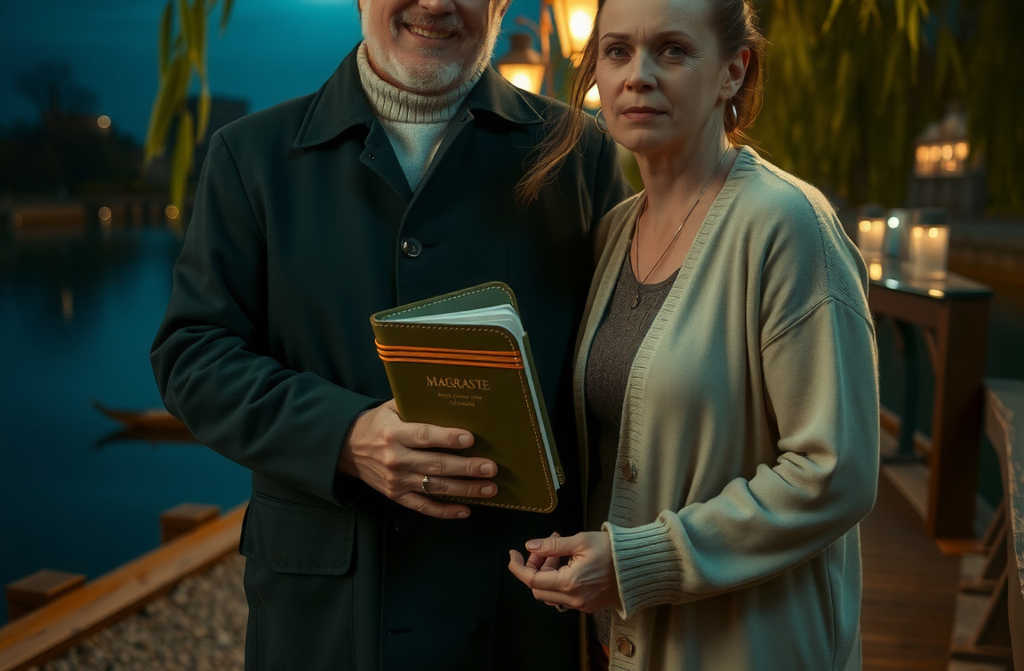
Their eyes met, and for a heartbeat the years dissolved. No words were needed. Margaret lifted a small, battered notebook and handed it to him. Inside, on a page stained with tea, were the recipes she had once written for him: cabbage pie, apple crumble, the exact blend of herbs she used to soothe his stomach. Below the recipes, in looping ink, she had written, For the days when you need a reminder that love can be as simple as a warm plate and a quiet evening.
Michael felt tears well up, not of sorrow but of release. He took the notebook, feeling the weight of history in his hands, and slipped it into his coat pocket. He looked out over the river, the water reflecting the constellations he had once chased in his youth, now calm and steady.
In that moment, Michael understood that life was not a series of conquests or betrayals, but a series of choicessome bold, some quiet, some painful, some healing. He could not turn back the clock, but he could choose how to spend the hours that remained.
He turned back toward the path, his steps lighter. The night embraced him, and the river sang its ancient lullaby. As he walked, he whispered a promise to the water, to himself, and to the ghost of his past: I will live with the grace of a riverever moving, ever patient, ever accepting.
The story of Michael Parker did not end with a grand finale or a dramatic climax. It ended with a simple, quiet acceptance, a handonce tremblingnow resting gently on the rail of a bridge, feeling the pulse of the world beneath his fingertips, and finally, with a heart that, at last, was at peace.