
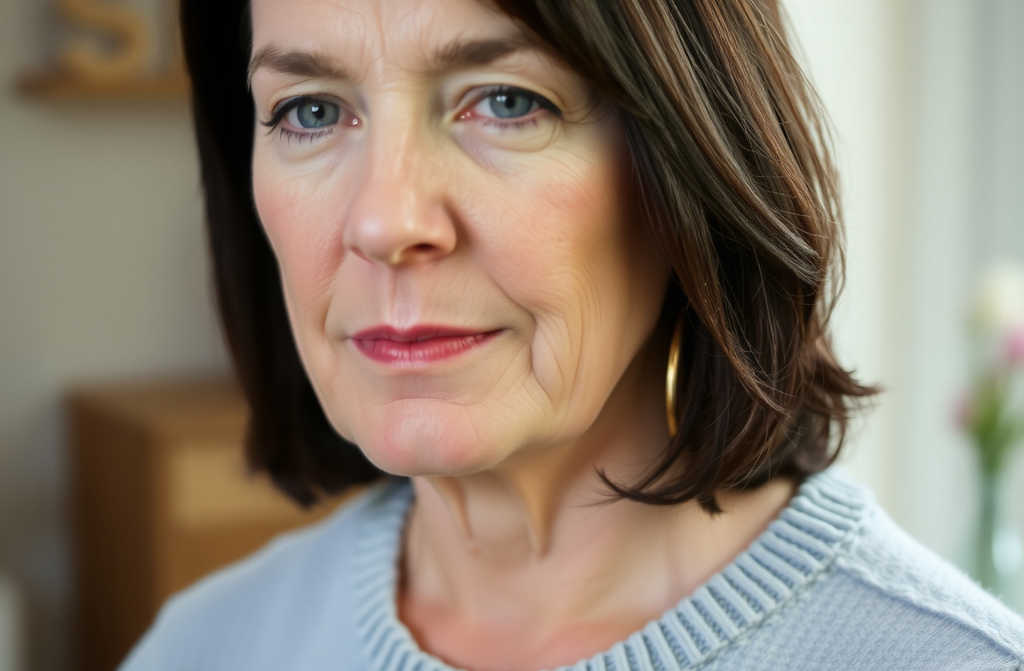
I’m looking for a bloke for the weekend, not for a lifetime I’ve got my life sorted just fine, declared the sixtytwoyearold woman, her words echoing through a hallway that seemed to stretch into infinity.
Let’s move in together.
Why would we?
How, why? We’re adults, after all.
Thats exactly why I dont get itwhy.
If a younger version of me had been told at thirty that at fiftytwo I would be fending off men who kept insisting on moving into my flat, I would have thought the world had finally lost its mind. In my twenties the script was reversed: men shied away from commitments, from sharing a kitchen, from any talk of a future. Now the reverse has taken hold. As soon as a gentleman spends a month or two with me, a sudden, almost absurd notion sprouts: to merge refrigerators, budgets, apartments, chores, mismatched socks and all the other delights of cohabitation. The strangest part, however, is that none of them can articulate why any of this should matter to me.
My name is Claire Whitaker, fiftytwo, divorced for fifteen years. I have an adult daughter, a cosy terraced house in Bristol, a steady job, a circle of friends, two weeks of holiday a year and a surprisingly tranquil existence. In the evenings I can spoon icecream straight from the tub while bingewatching dramas until two in the morning. On weekends I am allowed to sleep until after lunch. I can leave a mug on the kitchen table and ignore a lecture on tidiness. I can skip making stew if I feel no urge to. And most importantly, no one ever hovers over my shoulder asking, Whats for dinner tonight?
The problem is that men seem to treat my independence as a temporary hiccup that must be corrected by their very presence. At first they are dazzled. What an independent, interesting, selfsufficient woman, they coo. A few weeks later it becomes clear that their admiration hides a ulterior motive: they genuinely hope my selfreliance will one day be put to work for them.
The first disturbing call came from Edward Clarke. Edward, fiftyeight, looked respectable, spouted erudite anecdotes about his trips to the Lake District, and even knew how to fold napkins at a restaurant a skill that, after fifty, feels almost aristocratic. We dated for about a month. Cinema, walks along the Avon, cafés, weekend drives out to the Cotswolds. Then, one evening, he said something that made me set my coffee cup back on its saucer.
Listen, could you pop over to my place after work?
Why?
Just to cook something.
I asked again, halflaughing.
What would you cook?
Dinner.
It turned out Edward was simply tired of living alone. Not emotionally, but physically. His fridge stared back at him, empty. His stove refused to conjure a proper Sunday roast without assistance. His washing machine seemed to demand a human hand every time. In that moment I realized the man was treating a relationship as a sort of outsourced domestic service.
Edward, why dont you just cook yourself?
He looked at me as if Id suggested he perform heart surgery unaided.
Because youre a woman.
A dazzling argument, compact and efficient, shutting down any further questioning if you dont overthink it.
After Edward came Harold Finch. Harold, fiftyfive, delighted in griping about materialistic women. It was his favourite pastime. Every conversation, after a few minutes, curved back to stories of how people tried to use him for money. It was especially comic coming from a man who drove a car older than some university freshmen and counted the pennies at the supermarket checkout.
On our sixth date Harold invited me over.
Come Saturday.
Alright.
Just pick up some groceries on the way.
What do you need?
For dinner.
You want me to bring the groceries?
Yes.
And what will you do?
Ill meet you.
I still think he was an underappreciated genius, because not many can devise a date where the woman shops, delivers, cooks, and then thanks him for the invitation.
Harold, why dont you pay for the groceries?
What for?
What do you mean?
You have a job.
Thats when I saw that the word materialistic was reserved solely for others.
Soon a pattern emerged. Men loved my flat. They liked its order, the fact that there was always food, clean towels, fresh sheets and working plumbing. They liked my life. Yet, most were convinced that once the relationship began I should extend this service to include them as well.
Victor was the most amusing. He launched into talks of cohabitation with the enthusiasm of someone who had just discovered a way to slash expenses dramatically.
Can you imagine how cheap it would be if we lived together?
When a woman of my age hears the word cheap, she instinctively reaches for a calculator.
In what way?
One fridge, one broadband, one council tax.
For whom is it cheap?
For us.
I smiled.
Victor, where do you live now?
In a rented flat.
And me?
In my own.
Now the arithmetic suddenly turned oddly fascinating.
So youll stop paying rent, move into my place, cut costs and be happy?
Yes.
And wheres my benefit?
The question silenced him. For two minutes I could see the gears turning inside his head, a complex cognitive dance that never reached a conclusion.
The funniest episode involved Gordon Price, sixtyone, a very proper, very tired gentleman.
Its hard being alone, he confessed.
I nodded sympathetically.
Its easy for me, he added, then stumbled.
Men usually expect a different reaction. They anticipate sympathy, solidarity, a shared lament over solitude. When a woman calmly declares that she is fine on her own, the system glitches.
And now we arrive at the core issue that irks many men.
I do indeed need a man.
But not to wash his shirts.
Not to iron his trousers.
Not to prepare Sunday soups.
Not to hunt for his socks under the sofa.
Not to listen to endless tales of why he cant book his own doctors appointment.
I need a man for conversation, for trips, for walks, for the theatre, for travel, for a pleasant evening, for intimacy, for emotion, for joy but not to become a permanent address on my kitchen wall.
Men take offence at this stance. They label me selfish, spoiled, overly independent, claim I cant build a relationship. Yet no one can explain why a partnership must automatically translate into extra labour for the woman. Why does a man receive a companion, confidante, lover, housekeeper and chef all in one, while the woman must count his mere presence as a reward?
Sometimes I think many men simply havent noticed how the world has shifted. They still live by rules that made sense thirty years ago, when it was easier for a woman to accept an inconvenient marriage than to stay single. Today its different. Women my age often have jobs, homes, friends, grownup children, mortgages paid off, lives in order. When a man appears, the simple question arises: will my life be better with him?
If the answer is no, why bother?
So yes, I speak plainly. I need a man for the weekend. For the rest of my life I am already perfectly arranged. And the strangest thing? Every time I say that, men take offence. Yet, if you think about it, its the most honest compliment a relationship can receive, because I want someone beside me not because I cant manage alone, but because I enjoy his company.
Living together just so someone gets a free chef, cleaner and lifemanager? Sorry. That vacancy was filled fifteen years ago, and I have no intention of readvertising it.
Psychologists note
After fifty, many women find themselves in a position where relationships are a choice rather than a necessity. They already have a home, income, social network and the experience of past marriages. Consequently, the question shifts from How do I avoid being alone? to Will my life improve with this person?
The conflict emerges because some men still view cohabitation as a natural exchange: the man provides his presence, the woman supplies care and domesticity. Contemporary women, however, increasingly weigh real benefits against costs. If a relationship demands more resources than it returns in pleasure, the motivation to colive plummets.
The bottom line is simple: mature relationships today are built more on mutual comfort than mutual need. When one partner gains convenience and the other gains extra burden, the partnership rarely endures.