
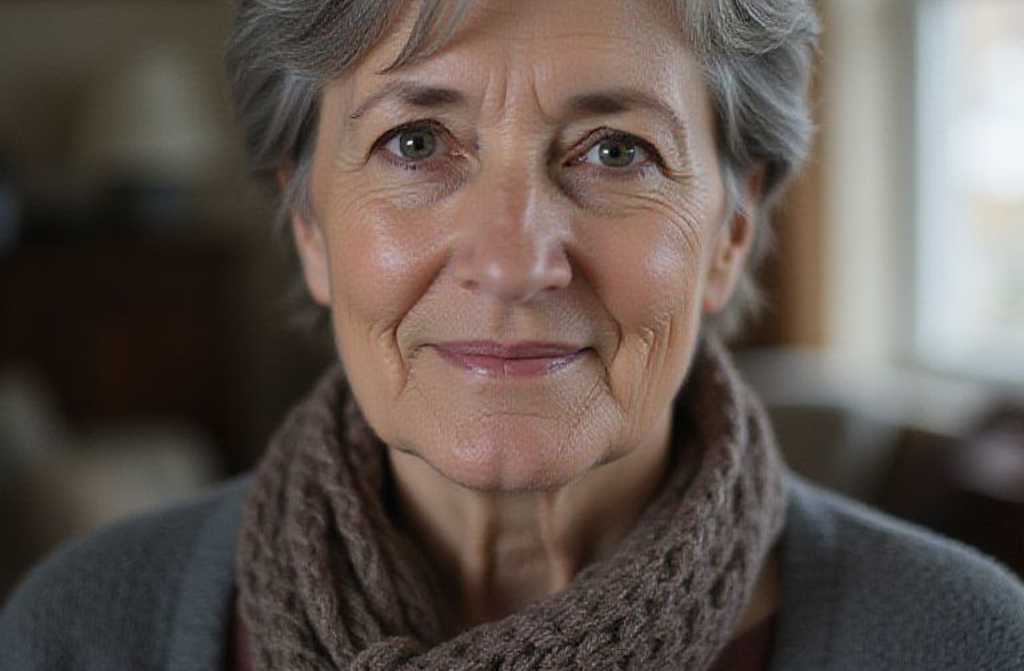
Margaret Baker was walking home from the chemist’s, and all she could think about was reaching her front door without any drama.
Stick. Step. Stick. Step. Her leg ached, the bag of medicines cutting into her palm. October had turned nasty this year – damp, raw, with no hint of mercy.
One more block. Just a bit further.
She was nearly past the children’s playground when she heard a quiet whimper from the bushes by the fence.
Margaret stopped. Stood still for a second. Thought: *I haven’t got the strength, just go home*. Thought it – and still turned aside.
She pushed the branches apart.
In the bushes lay a German Shepherd. Big, full-grown – and completely helpless. One front leg was bloody, both dried and fresh. Her coat was matted, ribs showing too clearly underneath. But worst of all were her eyes – alive, but almost ready to give up. Margaret had seen those eyes before. She knew what they meant.
The dog looked at her and didn’t growl.
Just looked.
“Well, what am I supposed to do with you,” Margaret said. Not a question – more a sigh.
She pulled out her phone. Called a taxi – the first time in months, she’d been saving the money. Gave the address of the veterinary practice on High Street.
The driver, seeing the dog, pulled a face.
“We don’t normally take animals, love. Only in the boot, maybe. She won’t make a mess, will she?”
“She won’t make a mess. Help me lift her in,” Margaret said in a voice she’d once used on careless orderlies.
To her surprise, the driver didn’t argue – nearly lifted the dog into the boot himself.
At the clinic they said: fracture, torn wound, malnutrition. Surgery needed straight away.
They gave her the price.
Margaret paused for a second. Then opened her purse.
It was almost her entire pension.
“Almost all – but not *all*,” she told herself. And put the money on the counter.
Margaret got home late that evening – with the dog, with a bag of medicines, and with instructions printed on two sheets of small type.
The dog, once inside, immediately lay down in the hallway. Margaret sat down beside her.
The Shepherd stretched out her bandaged leg. Paid Margaret no attention at all.
“Fine, then,” Margaret said. “Don’t look if you don’t want to. Main thing is, you’re alive.”
She hardly slept that night. Kept listening. Got up twice, shone her phone light.
In the morning Mary rang.
“Mum, you all right?”
“Fine. I’ve taken in a dog.”
Silence. A long one.
“What dog?”
“A German Shepherd. She was injured, lying in the bushes. I took her to the vet.”
“Mum.” Mary’s voice took on that special tone – the one she used when she was trying very hard not to lose it. “Mum, are you serious?! You can barely walk yourself! With what money?”
“With my own.”
“Your pension?!”
“Mary, please don’t shout.”
“I’m not shouting, I’m – *talking*. Mum, we agreed. I’ve been getting the room ready, you’re supposed to move in with us soon, and instead you’re –”
“Mary.” Margaret said it calmly. “I’ll call you later.”
And she hung up.
Later. That conversation could wait. Right now something else mattered.
The first few days were hard. The dog wouldn’t eat. Margaret bought different things: pâté, boiled chicken, rice with broth. Put the bowl down, stepped back, waited. Came back – untouched.
She sat down on the floor next to her – slowly, with a groan, struggling – and held food out on her palm. Just held it and waited.
On the third day the dog reached out and took a tiny piece of chicken.
Small. Almost invisible.
Margaret didn’t smile, just sat still. So as not to spook her.
*There. There, that’s good.*
She named her Jess. Didn’t decide straight away – at first thought, *why give a name if she might not stay*. Then realised: she would stay.
Jess was afraid of everything. Loud noises, sudden movements. When Margaret first tried to stroke her head, Jess shrank back as if expecting a blow.
*Who did this to you.*
She didn’t stroke – just put her hand nearby. On the blanket, next to a paw. Hand lying there – that was all. No pressure. Let her get used to it.
That was how the days passed.
Every morning and evening they went outside.
Jess came down the stairs carefully, on three legs – still sparing the fourth. Margaret too, carefully, holding the banister. *Two limpers*, she thought. *What a pair.*
They made it to the bench by the plane tree and stopped. Margaret sat down. Jess stood beside her, looking around – wary, tense, as if expecting danger from all sides.
So they walked every morning and every evening. At first – to the bench and back. Then to the corner of the building. Then around the yard. Margaret came home and felt her legs humming, but differently from before. Not from weakness. From tiredness. There’s a difference.
In November Mary arrived without calling first.
She rang the bell, came in, and stopped in the hallway. Saw Jess lying on her bed, bowls by the wall, the lead on a hook. Then her mother. Margaret was just having tea in the kitchen, cheeks pink from the walk.
“Mum, you… look well,” Mary said. Confused, as if she’d expected something else.
“I walk twice a day,” Margaret replied. “Sit down, I’ll pour you some tea.”
Mary sat. Looked at Jess – who lay still, only lifting her head.
“She doesn’t bite?”
“No.”
“What if a stranger comes in?”
“She’s not aggressive, just cautious.”
Mary was quiet for a moment. Then started again:
“Mum. The room’s ready. I’ve sorted everything. You know I’d feel better with you nearby. And you here alone – anything could happen.”
Margaret put her cup down.
“Would you take the dog?”
“Mum.”
“Mary. Just answer.”
A long pause.
“Our flat isn’t that big. And Kevin doesn’t like animals. You know that.”
“I know,” said Margaret.
And she didn’t bring it up again that evening.
Jess, as if sensing something, got up from her bed, walked into the kitchen, and lay at her owner’s feet. Right on the cold floor – lay down and stretched out.
Margaret lowered her hand and scratched behind Jess’s ear.
*You hear everything, don’t you.*
The conversation happened in December. Mary came on a Saturday with shopping bags, with food, with the look of someone who had made a decision and was about to announce it.
She put the groceries away. Did the washing-up. Then sat at the table and folded her hands – the way you do when you’re about to talk seriously.
“Mum. No offence meant.”
Margaret sat beside her. Jess lay in the other room – you could hear her sighing.
“Go on,” said Margaret.
“I’ve arranged it. The room’s ready, I’ve put up curtains, bought you a new mattress. It’s nice there, Mum. You’ll be near me, I’ll be calm. You won’t be alone.”
“I’m not alone.”
“Mum.” Mary closed her eyes for a second. “A dog isn’t company. It’s a responsibility you don’t need right now. You’re spending your pension on her, you go out in the cold twice a day, you –”
“I look better than I did a year ago.”
“You get tired.”
“Everyone gets tired.”
“Mum, I’ve found a good rescue centre. Decent people, they look after dogs, they’ve got a big run. Jess would be happy there. Happier than in a one-bedroom flat.”
Jess sighed again in the other room. Got up – you could hear her claws on the floor – and came into the kitchen. Stopped at the doorway, looked at them both. Then walked over to Margaret and sat beside her.
Mary looked at the dog. Then at her mother.
“Mum.”
“I hear you,” Margaret said quietly. “I hear everything.”
She lowered her hand and placed it on Jess’s head. Jess didn’t move.
“Do you remember when I worked?” Margaret asked suddenly. “You were little, but maybe you remember. I left at six in the morning. Came home – you were already asleep. Your dad used to say: *you don’t exist in this house, you only exist in the hospital*.”
Mary said nothing.
“I wasn’t offended. I understood: there were people there. Worse off than me. They needed me.” She spoke evenly, without drama. “Then your dad died. And I retired. And suddenly I wasn’t needed by anyone. You’re grown up, you’ve got your own life. That’s right. But I… Mary, I just didn’t know what to do with myself.”
Margaret looked out the window. Outside it was December – grey, early dusk, the street lamps already lit.
“When I found Jess – I thought: *great, another problem*. I haven’t got the strength, I haven’t got the money, my health isn’t what it was. Why would I do this. And then she took a piece of chicken from my hand – on the third day. Such a tiny piece. And I realised I hadn’t slept those three nights not because I was tired – but because it mattered. Because if I didn’t keep an eye on her, no one else would.”
Jess moved closer. Margaret scratched behind her ear.
“I started going outside. First to the bench and back, out of breath. Now – three circuits round the block and I don’t notice. My blood pressure tablets – I reduced the dose two weeks ago, the doctor said it was fine. I got talking to Valerie from number 14, now we sometimes walk together. I bought myself proper winter boots – the first time in three years, because before I thought: *why do I need boots, I don’t go anywhere*.”
She turned to her daughter.
“Now I do go somewhere, Mary.”
Mary sat and looked at her mother. She wanted to say something – Margaret could see it – but didn’t.
“I know you’re worried,” Margaret said. “That I’ll fall. That there won’t be anyone to call an ambulance. That it’s slippery in winter, that I’m alone, that anything could happen. I understand that fear – I had it myself, for your dad those last years.”
“And what’s wrong with that?” Mary said quietly.
“Nothing wrong. Only I’m not ready to be helpless yet.” Margaret gave a small smile. “Too soon.”
Mary looked down.
They were quiet for a long time.
“You won’t give her up?” Mary said.
“No.”
“And you won’t move?”
“No.”
Mary nodded. Slowly, as if something inside her was settling into place – with a creak, but settling.
“Then I want you to have a panic button. A bracelet – you press it, I get a call straight away.”
“Fine.”
“And once a week I come round. Not to check up – just to visit.”
“I’d like that.”
“And this one,” Mary nodded at Jess, “I’ll try to accept. I’m not promising to love her. But I’ll try.”
Margaret looked at her daughter.
“Come here,” she said.
Mary stood up. Came over. Margaret hugged her tightly. Mary froze for a second, then hugged back.
Jess discreetly moved away to her bed.
Outside it was fully dark. The street lamps glowed steadily, a dusting of snow on the windowsill.
Winter passed without her noticing.
Margaret didn’t know when exactly – just that at some point she realised December was over, then January, then February, and she was still walking, morning and evening, in frost and thaw, in snow and slush.
Jess walked beside her. No limp now – the leg had healed completely, the vet said you couldn’t tell.
People in the neighbourhood knew them. Valerie from number 14 always came out at the same time – they walked together, chatted. About the kids, about health, about politics sometimes – cautiously. Old Mr. Turner from the third floor always stopped and gave Jess a biscuit, which she took politely, with dignity. The children from the playground had been scared at first – a German Shepherd after all – but then got used to it, started running up.
Margaret left her stick at home in February.
One day she just went out without it and didn’t remember. Came back, saw the stick by the door and thought: *well, would you look at that.*
In March she rang the allotment society – to ask if the gate was open yet. It was. She booked a place on the bus.
Jess travelled with her on the back platform, watching out the window.
The allotment was just the same – the old shed, last year’s leaves, bare apple trees. Margaret walked around the plot, touched the soil – still cold, but no longer frozen. She made mental notes: where to plant the phlox, where the petunias, where the dill and parsley – just for the smell.
Jess tore around the plot like a puppy.
In April Mary came. With Kevin. Kevin walked in, saw Jess, tensed up. Jess came over, sniffed his hand, and walked away – as if to say: *checked, you’re safe.*
Kevin let out a breath.
“Well,” he said cautiously, “at least she’s calm.”
“Clever,” Margaret corrected.
Over tea, Mary watched her mother – carefully, studying her. Then said quietly, while Kevin stepped out onto the balcony:
“Mum, you’ve changed.”
“For the better?”
“Yes.”
Margaret thought about it.
“I’m just living again now,” she said. “I suppose it shows.”
Jess put her head on Margaret’s lap.