
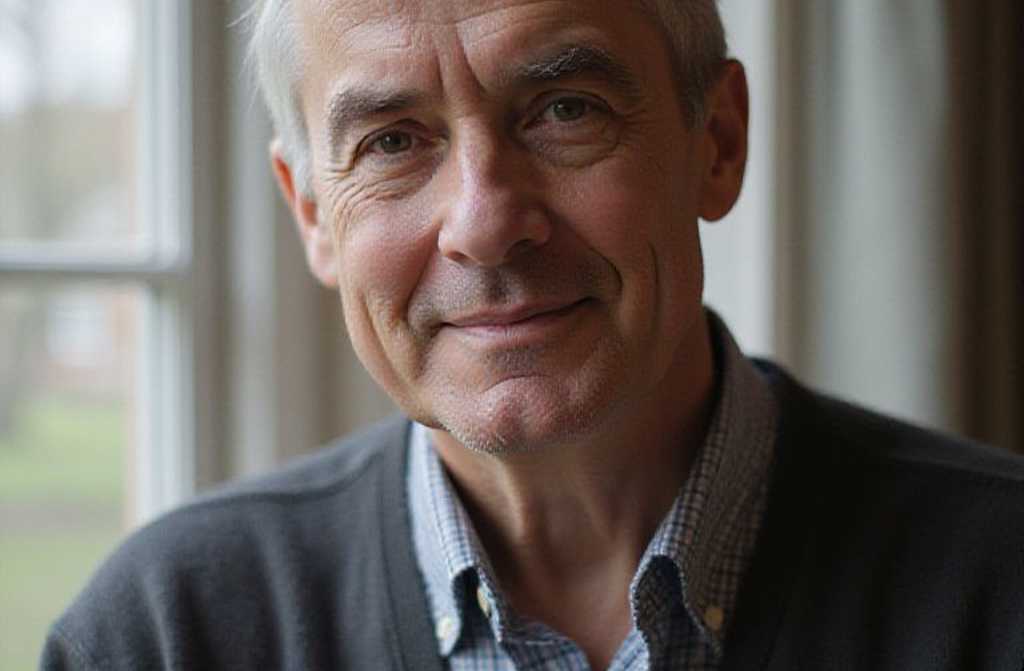
Andrew Parker sat by the window, staring at the ad on his phone. The letters swam in front of his eyes – his glasses had gone missing again. But the text was simple enough:
“Free to a good home: ginger cat, neutered, litter-trained.”
No. Not free. For sale. That way there was a better chance of him ending up with a family who could afford him.
“Rusty,” he called softly. “Come here, ginger.”
The cat appeared as if by magic – a chubby, purring lawnmower on soft paws. He jumped onto Andrew’s lap and curled up into a ball. Warm. Alive.
Andrew scratched behind his ear. Rusty squinted with pleasure, and the old man felt his heart clench. Six months now since he’d been alone.
“What are we going to do, eh?” he whispered. “The pills are running out, and so is my pension.”
The tomcat purred, oblivious. Andrew opened the calculator on his phone. Food – forty pounds a month. Litter – another twenty. The vet bills he didn’t want to think about. And the blood-pressure tablets cost sixty quid. Every month.
“You see, Rusty, I don’t want to part with you – I just can’t manage any more.”
He typed into the ad: “Cat to a good home. Fifty pounds.” He deleted it. Wrote again: “Selling cat. Eighty pounds.”
His phone rang immediately. A woman’s voice:
“Hello, I’m calling about the cat. Can I come and see him?”
“Of course,” Andrew replied, his voice a little hoarse. “Come round.”
An hour later, there was a knock at the door. On the doorstep stood a woman in her fifties, with sad eyes.
“I’m Mary,” she said. “Where’s the cat?”
As if on cue, Rusty trotted out of the kitchen – but not towards the visitor. He went straight to Andrew, rubbing against his legs, purring, gazing up at him with adoring eyes.
“Here he is, my ginger lad,” Andrew said, trying to sound matter-of-fact. “He’s a good cat. Affectionate.”
Mary crouched down and held out her hand. Rusty sniffed it, but didn’t go to her. He went back to Andrew.
“Why are you selling him?” she asked quietly.
“Oh, circumstances,” Andrew muttered, looking away.
Then Mary noticed: the pensioner’s hands were trembling. And the cat wouldn’t leave his side.
She slowly looked around the flat. It was clean, tidy, but empty. A dead ivy plant on the windowsill. On the table – a pillbox, nearly empty. Another one, also nearly empty.
“Nice flat,” she said. “Have you lived here long?”
“Forty years,” Andrew replied, stroking Rusty. “My wife Helen and I bought it together…”
He didn’t finish. He didn’t need to.
Mary nodded. She herself had lost her dog Bella not long ago – a mongrel who’d lived fifteen years. The emptiness in the house had been so vast the walls felt ready to cave in.
“Is the cat healthy?” she asked.
“Oh yes, he’s fine. It’s just…” Andrew hesitated. “I can’t manage any more. Old age, you know.”
Rusty let out a long, low meow and rubbed against Andrew’s leg – as if he understood.
“What food do you give him?” Mary continued.
Andrew showed her the kitchen. Two bowls – one with water, one with dry biscuits. The cheap kind, from Tesco. Not the worst, but not good either.
“Is he fussy?”
“No, he’ll eat whatever you give him. He’s a good lad. Very clever. When Helen was ill, he used to lie on her bed and warm her – as if he knew.” Andrew’s voice cracked.
Mary crouched in front of the cat. Rusty looked at her, but pressed himself against Andrew.
“Tell me honestly,” she said softly, “why eighty pounds?”
Andrew looked flustered. “Well, he’s a good cat. A pedigree.”
“Rusty’s a mongrel,” Mary gently corrected. “A handsome one, but a mongrel. And you love him. So why are you selling him?”
Andrew turned towards the window. He was silent for a long time. Rusty purred on his lap, and the old man stroked him with trembling hands.
“My medication has gone up. And the cat food. He was ill last month – took him to the vet. Cost eighty quid. My last.”
“What about your daughter? Son? Family?”
“My daughter lives in Germany. She’s raising three kids of her own – she doesn’t have time for an old man. And I don’t ask for anything.”
He sighed.
“When Helen was alive, we managed somehow. But on my own – I can’t.”
Mary listened, and felt her heart tighten. There he sat, this proud old man, selling the only living thing left in his home. And the cat didn’t understand – he just pressed closer, trusting.
“What if I don’t buy him?” she asked.
“Someone else will.” His voice was steady, but his hands kept shaking. “The ad’s up. I’ve had calls.”
“Wouldn’t you miss him?”
Andrew looked up sharply. “Do you think this is easy for me? You think I’m doing this for fun?”
He stopped himself, pressing his lips together. Rusty was startled by the sudden movement and jumped off his lap, but didn’t go far – he sat down next to him.
And then Mary understood: she couldn’t just buy the cat and walk away. She couldn’t separate them.
But she had to think of something.
Mary was silent for a long while.
“Andrew,” she said at last, “what if I don’t buy the cat?”
The old man flinched. “What do you mean? Why did you come, then?”
“I came to see him. I’ve seen him. And I’ve decided I won’t buy him.”
Andrew went pale. His hands shook harder.
“But you rang! You said you wanted a cat!”
“I do want one.” Mary stood up and walked to the window. “Just not this one.”
“What’s wrong with him?!”
She turned around. He saw tears in her eyes.
“There’s nothing wrong with the cat. But there’s something wrong with his owner.”
“I don’t understand.”
“You do, Andrew.” Her voice trembled. “I lost my dog not long ago. An old, sick dog. She lived with me for fifteen years. And you know what the worst part was before she died? It wasn’t the illness. It wasn’t the pain. It was the way she looked at me – as if she was apologising. For being a burden.”
Andrew swallowed. Rusty came over and rubbed against his leg.
“And now I look at you and Rusty – and I see the same thing. He clings to you, and you’re ashamed because you can’t afford to feed him. You think you’re doing the right thing, giving him away to a good home.”
“Isn’t it right?” Andrew burst out. “Would it be better for him to go hungry with me?!”
“Who says he has to go hungry?”
There was a pause. Rusty mewed – softly, plaintively.
“I’ve got another idea,” Mary continued. “I’ll bring the food. Every week. And money for the vet, if needed.”
“What?!” Andrew stared at her as if she were mad. “Why would you do that?”
“So I can help the cat. But I don’t want to separate you.” She smiled through her tears. “Call it a happiness rental.”
“A rental?”
“Yes. I pay for the right to come over and stroke Rusty. And it gives me an excuse to visit a lonely old man. Have a cup of tea. A chat.”
Andrew was silent. His eyes were wide, his lips trembled.
“That sounds… demeaning,” he forced out.
“Why demeaning?” Mary sounded genuinely surprised. “It’s a fair deal. I get a cat to interact with – you get help with the food. Mutual benefit.”
“No! I’m not a beggar! I’m not a charity case!” Andrew stood up abruptly.
“Who said you were?”
“You – you’re offering money to a stranger!”
Mary shook her head. “I’m offering a deal. Payment for the chance to spend time with a cat. And with a clever, interesting man who raised that cat.”
“Stop!” His voice broke. “Don’t pity me!”
He fell silent. He sat back down in the armchair and lowered his head.
Rusty jumped back onto his lap.
“Do you know what the worst thing is, Andrew?” Mary asked quietly. “It’s not poverty. It’s not old age. It’s pride – the kind that stops you accepting help.”
“It’s not pride,” he whispered. “It’s shame.”
“Shame for what?”
“For not coping. For my wife dying and leaving me behind. For not saving enough money. For my daughter being so far away. For not even being able to feed my own cat.”
Tears rolled down his wrinkled cheeks.
“And now you’ve turned up. Offering help. And I’m like some…”
“Fool?” Mary supplied softly.
“…yes. A fool.”
She came over and crouched beside his chair.
“Andrew. My flat is empty. My dog is gone. I have a job I don’t want to go to. And there’s no one around I can tell about my day. But you have Rusty. And a good heart.”
“How do you know I have a good heart?”
“Because a mean person couldn’t love a cat like that.”
Rusty purred louder, as if in agreement.
“So what do you say? Deal?”
Andrew was quiet for a long time. He stroked the ginger fur. He thought.
Then the old man sighed. Deep and long.
“Well, maybe we could give it a try?”
Two months later.
Andrew sat by the window with Rusty on his lap, looking out at the garden. Mary would be here soon – every Tuesday she brought food and some little treats.
“Hear that, ginger?” he whispered to the cat. “Sounds like her footsteps.”
Rusty lifted his head, ears pricked. Yes – that was her.
A knock at the door.
“Andrew? It’s me!”
“Come in, come in!” The old man stood up, smoothing his shirt. In two months he’d visibly perked up – even his cheeks had some colour.
Mary came in with big bags, smiling.
“Hello, handsome!” – that was for Rusty.
The cat immediately started purring and rubbing against her legs.
“And hello to you too, Andrew. How are you? How’s your health?”
“Not bad at all. Went to the doctor yesterday – blood pressure’s normal. Your tablets are helping.”
“Oh! It’s Saturday tomorrow – shall we take Rusty to the park on his harness?”
Andrew looked embarrassed. “Oh, I don’t know. People will stare – an old man with a cat on a lead.”
“Let them stare!” Mary laughed. “They’ll be jealous of your gorgeous boy. Won’t they, Rusty?”
The cat meowed – approvingly.
They had tea in the kitchen. Andrew told her about the neighbours, the gossip in the street. Mary listened, nodded, laughed. In two months a special closeness had grown between them – not family, but very warm.
“You know,” she said, finishing her tea, “did your daughter call this week?”
“She did. Asked how I was. I told her about you.”
“What did she say?”
“She was surprised,” Andrew admitted. “She said, ‘Dad, I’m so glad you’ve got a friend.’ Friend.” He smiled. “Sounds funny at my age, doesn’t it?”
“Why funny? Friendship doesn’t have an age limit.”
Rusty suddenly jumped off the windowsill and padded over to his food bowl. Quality food – no longer a problem.
“I nearly sold him,” Andrew said quietly.
“Good thing you didn’t.”
“Yes… I thought it was the end of the world. But it was really the start of a new life.”
Mary nodded.
“Sometimes the worst moments lead to the best changes.”
They sat in silence, watching Rusty crunch his biscuits contentedly. He had everything now – food, affection, the attention of two people who loved him.