
Sometimes life throws such stories at you that later you think—surely it couldn’t have happened exactly like that. But it did.
In the courtyard of a three-storey block of flats on Maple Avenue, a dog appeared. Big, ginger with black patches. One ear was torn, and she dragged her hind leg.
People were scared straight away. Of course—a huge dog, and injured at that. And injured animals, as everyone knows, are the most dangerous. That’s what the residents thought.
“We should ring the council,” said Auntie Jean from the ground floor, adjusting her glasses. “Otherwise she’ll bite someone.”
“Right you are,” agreed Uncle Bill from the second floor. “There are kids all over the yard.”
And everyone started giving the dog a wide berth. As if she wasn’t lying quietly by the entrance, but snarling and lunging. But she just lay there. And shivered. Even in the October sunshine, she shivered.
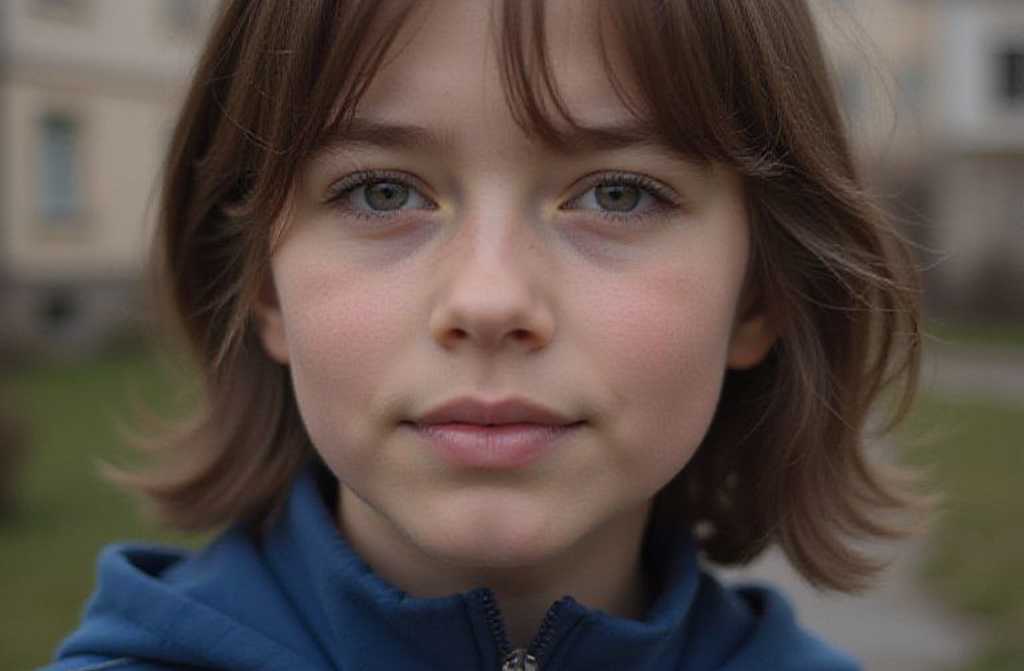
Alice noticed the dog the very first day. The girl generally noticed what adults walked past without seeing. Maybe because she often felt invisible herself. After her father died, the world had somehow become different. Greyer, somehow.
“Mum, what’s wrong with the dog?” she asked when they were coming back from the shops.
“What dog?” Irene didn’t even look towards the entrance.
“That one. Is her paw hurting?”
Her mother finally saw her. And immediately took her daughter’s hand tighter.
“Don’t go near her, Alice. She might be sick. Or vicious.”
“But she’s not vicious,” the girl said quietly. “She’s sad.”
Adults somehow can’t tell the difference between sadness and anger. Especially in animals. Alice had noticed that long ago.
Days passed. The dog didn’t bother anyone. She just lay by the wall, sometimes tried to get up—limped towards the bins, looked for something. Found nothing, came back. And lay down again.
But the residents kept talking and talking.
“It’ll be cold soon, and she’s still here.”
“Yesterday kids ran past, and she lifted her head. Got such a fright.”
“Lifted her head? She’s enormous!”
Alice watched from the window every day. The third floor gave a perfect view.
“Mum, why isn’t anyone helping her?”
“Because it’s not our business, love.”
But to Alice, problems were things like not having money for new boots, or having a toothache. This was someone dying right in front of everyone. And they all pretended not to see.
On Saturday morning the girl woke early. She looked out—the dog was lying there, but oddly. On her side. Not moving at all.
“Mum!” Alice ran to the kitchen. “That dog, she’s…”
“What’s she done?”
“I think she’s really poorly.”
Irene came to the window. Looked. Yes—something was wrong.
“Probably sick,” her mother sighed. “Poor creature.”
“Then let’s help!”
“Alice, we can’t.”
“Why can’t we?”
Why indeed? Irene didn’t know herself. Just—you can’t, and that’s that. They had enough troubles of their own.
But at lunchtime the dog tried to get up. And fell. Just flopped onto her side. Stayed there. Only breathing heavily—you could see her ribs heaving.
Alice saw that.
She put on her jacket. Took some ham from the fridge. Mum was in the shower.
In the yard, the dog lay with her eyes closed. Up close she seemed even bigger. And not scary at all. Just tired to death.
“Hello,” Alice said softly. “How are you doing?”
The dog opened her eyes. Looked at the girl. And in that look there was such surprise—as if she thought people had forgotten how to talk to animals.
“I brought you some ham. Want some?”
Alice held out her hand with the food. The dog sniffed, but didn’t eat. Just licked the girl’s fingers. Her tongue was hot.
“You’re ill, aren’t you?” Alice stroked the ginger head carefully. “And everyone’s scared of you. They think you’re mean. But you’re not.”
And then the dog did something amazing. She laid her head on Alice’s knees. A heavy, big head. And closed her eyes.
“Alice! Alice, get away from there this instant!”
Mum was running across the yard, waving her arms. Her hair was wet, her dressing gown hanging open—she’d clearly dashed straight out of the shower.
“Have you lost your mind? She could bite you!”
“Mum, she doesn’t bite. Look—she’s sick.”
Irene stopped three paces away. She stared at her daughter, sitting next to a huge dog and stroking its head. And the dog lay perfectly still.
“Mum, remember how you told me about Dad? How as a child he used to bring home every stray cat he found?”
Irene remembered. Her father-in-law had told her—Sergei was like that. Soft-hearted to a fault.
“And you said that the worst thing is to walk past someone else’s pain.”
When had she said that? Ah, yes. After the funeral. When Alice had asked why her father used to go to the hospital to read books to old men he didn’t even know.
“Mum, let’s not walk past this time, shall we?”
Irene looked at her daughter. And suddenly she saw Sergei in her. That same boy who dragged cats home. Who could never walk past someone else’s trouble.
“Stand up slowly,” she said. “Carefully.”
But the dog seemed to understand. She lifted her head on her own, freeing the girl. Looked at Irene with such an expression… as if to say, “I won’t hurt her. I promise.”
“She won’t eat,” Alice said. “I think she’s very poorly.”
Irene came closer. Squatted down beside her. The dog didn’t growl, didn’t bare its teeth. Just looked. With clever, sorrowful eyes.
“Is your paw hurting?” Irene asked, and surprised herself by talking to the dog as if it were a child.
The dog seemed to nod.
“Right then,” her mother sighed. “Let’s go make a phone call.”
Dr. Peterson arrived half an hour later.
“Fracture. An old one, badly healed. But fixable,” he said, examining the leg. “She’s a pedigree dog. German Shepherd. Looks like she got lost.”
“And what will happen to her?” Alice asked.
“Well, if nobody claims her…”
“We’ll take her.”
Irene looked at her daughter. At the dog. At the red scarf tied round its paw.
When had her little girl become so grown-up?
A month later.
Rex (that’s what Alice had named him) was sleeping on the rug beside her bed. His leg had healed. His coat shone.
“Mum,” the girl said before sleep. “Why was everyone scared of him? He’s kind.”
Irene stroked her daughter’s hair.
“You know. Sometimes people are afraid to show kindness. What if they’re misunderstood? What if they’re judged?”
“Silly.”
“Yes. Silly.”
After lunch Irene stood and looked out of the window.
Down in the yard, Alice was playing with Rex. The dog gently, softly nudged the girl. And she laughed.
That day, her daughter had taught her not to be afraid.
Not afraid of kindness.
Not afraid to reach out to someone in need.
And in the courtyard rang laughter.
And the bark of a big, gentle dog who had finally found a home.