
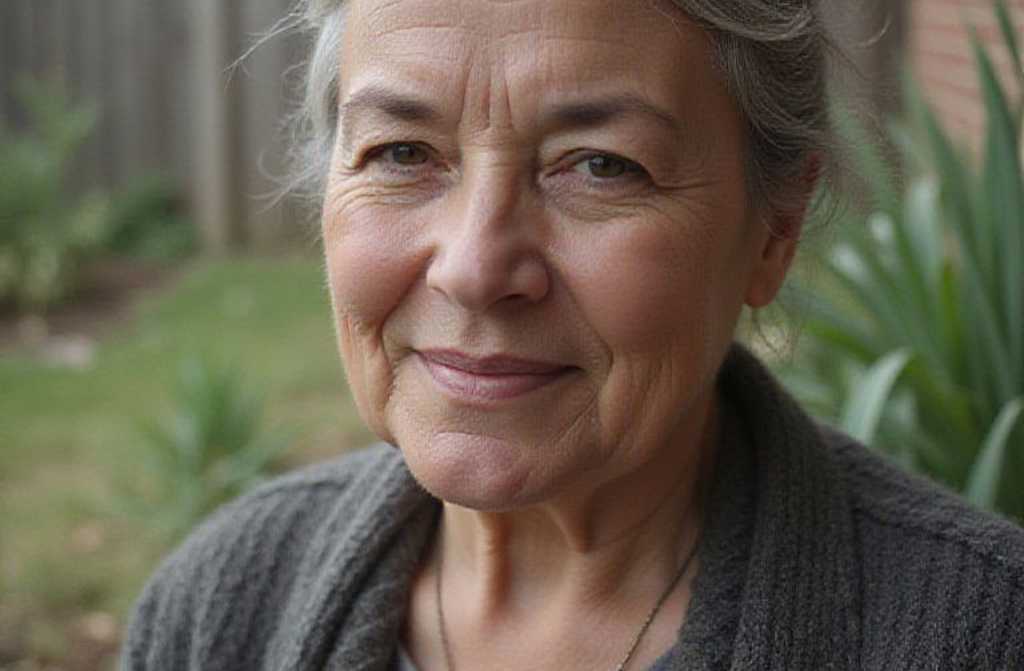
Margaret put the kettle on. Just a habit. Six in the morning, kettle, mug, porch. Every day the same.
The tea steeped. Margaret stepped onto the porch and sat on the step. The garden greeted her with the usual sight: onion beds, a crooked fence that William had always meant to fix, a gate on rusted hinges. And a bowl.
A blue plastic bowl with a crack along the rim. Empty. Clean. Right by the threshold.
It had been there for a year.
Neighbour Sarah, coming over for salt or just to grumble, would always catch sight of that bowl.
“Maggie, just get rid of it. Why tear your heart out? There’s no dog. Been a year now.”
But Margaret never moved it. And she couldn’t explain why.
Daisy had vanished during a storm. A terrible July storm, when the sky split in two and the wind howled like it would rip the roof off. In the morning Margaret stepped into the garden—the gate was wide open. The latch had been torn off. And Daisy was gone.
Margaret searched. Lord, how she searched. She stuck notices on every lamppost. Walked the streets, calling. Peered into every alley, every building site. Asked the neighbours, rang the vet, even tried the police once—they looked at her like she was mad.
A month. Two. Three.
Then she stopped searching. But she didn’t move the bowl.
Sarah had brought Daisy to her—six months after William’s funeral. A puppy, ginger, with a white chest and big ears. Eyes like saucers. Sarah set her down on the doorstep and said simply:
“Take her, Maggie. It’s hard being alone.”
That first evening the puppy sat on Margaret’s lap, and she stroked her head and said aloud:
“Well then… we’ll be lost together now.”
The habit of talking aloud had stayed. Even after Daisy. Only there was no one left to listen.
Margaret finished her tea. She stood, rubbed her lower back. Something scraped softly at the gate. She listened.
Silence.
“Cats,” she thought. And went inside.
That evening she sat in front of the telly. Some soap—one of those where everyone shouts, slams doors, and argues about who cheated on whom. The television filled the silence of a house where no one had spoken for a long time.
Something flickered past the window.
Margaret drew the curtain.
By the fence, in the dusk, stood a dog. Not moving. Just standing, watching the house. And at her feet, pressed close, a tiny ball of fur.
Margaret threw on a cardigan and went out onto the porch.
The dog didn’t bolt.
Strays twitch, jump back, tuck their tails. But this one stood. Only tilted her head—sideways, the way dogs do when they’re listening.
Margaret took a step. Another.
A ginger dog. With a white patch on her chest.
Margaret grabbed the porch railing.
“Daisy?”
Her voice cracked. It came out thin, hoarse—almost a whisper. But the dog heard. Her tail wagged.
And from behind her, clumsily shifting paws, came a puppy. Tiny. Ginger. With a white chest.
A perfect copy.
Daisy came forward, pressed her wet nose into Margaret’s knees. Familiar, as if she’d done it only yesterday. The puppy hung back, hiding behind its mother, peeking out with one eye.
Margaret stroked Daisy’s head and wept. Silently, without a sound. Tears ran on their own—she didn’t even wipe them away. Under her fingers, fur—warm, matted. And ribs. She could count them. And on her side, a scar. Long, pink, healed.
“Daisy… where did you come from? Where have you been?”
Daisy didn’t answer. Only pressed closer and closed her eyes.
That night Daisy lay in her old spot—by the door, on the doormat. As if she’d never left. As if those three years had just been a dream. The puppy curled up beside her, nose tucked into her side.
Margaret sat at the kitchen table, cheek resting on her hand.
She looked at the dogs and couldn’t look away.
She picked up the phone. Two in the morning. Andrew would be cross. But she couldn’t wait until morning. Couldn’t.
“Mum?” His voice was sleepy, worried. “What’s happened?”
“Daisy came back.”
Silence on the line.
“Mum… which Daisy? She disappeared.”
“She came back, Andrew. And with a puppy. Her exact copy.”
“Are you sure? Maybe it’s just a similar dog?”
“Andrew. I know my own dog.”
He paused. Then said carefully:
“Alright, Mum. We’ll talk in the morning, okay?”
Margaret put the phone down. Looked at Daisy. The dog wasn’t asleep—she was watching. Dark, tired, knowing eyes.
In the morning Margaret took Daisy and the pup to the vet. The young nurse examined them for a long time in silence. Felt the legs, looked in the mouth, touched the scar on the side.
“That scar is old. Healed, but serious—looks like a tear wound. Teeth are worn, one canine missing. Paw pads are cracked, calloused.”
She took off her gloves and looked at Margaret.
“Can’t say where she’s been, but she’s walked a long way, Margaret. Those paws aren’t from a life indoors. The puppy’s about three months. Healthy, strong.”
Margaret nodded, thinking her own thoughts. A whole year. Lived somewhere, feared someone, ran from someone. Maybe someone picked her up—and let her go again. Maybe she joined a pack. And then she came back.
That afternoon Sophie rang. For the first time in two months. Her voice was guarded, wary. As it had been for the last two years.
“Mum, is it true? Andrew told me.”
“It’s true.”
“And the puppy looks just like her?”
“The spitting image.”
A pause. Margaret heard her daughter breathe into the receiver. Then Sophie said quietly, almost timidly:
“I’ll come this weekend. To see them.”
Margaret put the phone down and stood for a long time, holding it. Just stood. In the middle of the kitchen. And Daisy lay by the door, watching her—calm, patient. As if she knew it would happen.
Sophie arrived on Saturday, around lunchtime. She got out of the car, stood by the gate—as if gathering her courage. Or remembering when she was last here. She pushed the gate open, stepped into the garden, and saw Daisy at once.
The dog was lying on the porch, front paws stretched out. The puppy played beside her, gnawing on a splinter of wood, growling comically, shaking his head. When he heard footsteps, Daisy lifted her head. She didn’t bark. Just looked.
Sophie slowly crouched, held out her hand. Daisy sniffed her fingers—long, carefully. Then pressed her head into the hand, as she always had. She remembered.
The puppy immediately bounded over, poked his wet nose into Sophie’s palm, licked her. Sophie laughed—short, surprised. Then fell silent.
“Mum…”
Margaret stood in the doorway. She nodded.
Sophie looked up. Her eyes were shiny.
“She found you. After a year.”
Margaret didn’t speak.
That evening they sat in the kitchen. They talked about Daisy. Not about the hurt, not about Andrew, not about those words spoken two years ago that had stood between them like a wall. About the dog. How she vanished, how Margaret searched, how she stopped. How the bowl stayed by the door all year.
“You really didn’t move it?” Sophie asked.
“Why?”
Margaret shrugged.
“Don’t know. I couldn’t.”
Sophie was quiet. She put down her spoon.
“She could have stayed anywhere, Mum. A whole year—that’s not a week. She lived somewhere, she had a puppy. And still she came back here.”
“She came back,” Margaret nodded.
Sophie said softly, not looking at her:
“Mum, I thought you were all alone out here. Andrew’s far away, I…” She faltered. “It’s stupid. Two years of holding a grudge. Stupid and…”
She didn’t finish. Margaret didn’t press. She just stood, poured more tea.
That night everyone slept. Except Margaret.
She stepped onto the porch. May, warm, damp. The smell of honeysuckle and wet earth. Daisy lifted her head—looked, wagged her tail, then put her muzzle back on her paws. The puppy slept beside her, curled into a small, warm, ginger ball.
Margaret sat on the step. She placed her hand on Daisy’s head. The dog pressed her ear into Margaret’s palm.
A whole year, Daisy. A whole year without you. Where did you walk? Who hurt you—that scar… Maybe someone took you in. Maybe they drove you away. But you still came home. With cracked paws, with a sore side.
Daisy sighed—deep, doglike, her whole body. And laid her head on Margaret’s lap.
The next day Sophie helped in the garden. Margaret showed her where things were planted, and Sophie listened absently, nodding. The puppy got underfoot—climbed into a bed, stole the trowel, grabbed the hose in his teeth and pulled, digging in all four paws. Small, but stubborn. Just like his mother.
Sophie laughed. Margaret stood still, hoe in hand. No one had laughed in this garden for a long time. Maybe not since William died.
“Mum,” Sophie said, wiping her eyes. “What shall we call him?”
“Who?”
“The puppy. He can’t go nameless.”
Margaret looked at the ginger bundle that was concentratedly chewing the hose and growling—seriously, fiercely, like a real beast.
“How about Rusty? He’s ginger.”
Sophie nodded.
“Rusty. That’s good.”
That evening Sophie packed. She slung her bag over her shoulder and walked to the car. Daisy sat beside Margaret on the porch. Rusty stayed close, as usual.
Sophie hugged her mother. Long, tight. So tight that Margaret felt her daughter trembling.
“I’ll come back, Mum.”
Margaret nodded. She didn’t say “we’ll see” or “of course, darling.” She just nodded. Because she believed it.
A month passed.
Rusty had grown, filled out, broadened in the legs—and tore around the garden so hard the onion beds quivered. Margaret had already replanted the onions twice, because that ginger hurricane considered the beds perfect for digging. She scolded him without real anger, just for form’s sake. And he would sit, head tilted, looking at her with such innocent eyes that Margaret would wave a hand:
“Fine, dig. Can’t keep up with you anyway.”
Daisy followed her puppy calmly, unhurriedly.
One morning Margaret stepped onto the porch with a mug of tea. Her usual view—onion beds, fence, gate. By the threshold on the porch sat two bowls: the blue one with the crack along the rim, and a new green one.
The phone rang. Sophie.
“Mum, I’ll come Saturday. I’m bringing Rusty a bone, a big marrow bone. There’s a butcher I know at the market, I’ve already arranged it.”
“Come,” Margaret said. “I’ll bake an apple pie. The way you like it.”
“Apple pie—that’s good.” Sophie’s voice was warm, homely. The way it had been a long time ago. A very long time ago.
Margaret put the phone down. Daisy lay at her feet—warm, calm. Rusty was busily fighting a stick in the middle of the garden. She suddenly realised that for the first time in a year she wasn’t counting days, counting months, counting how long it had been since everything went quiet. Because the silence was over.
Two bowls by the threshold. And a daughter coming on Saturday.